


There are few smells more comforting than cornbread baking in the oven. It’s warm. Familiar. Slightly sweet. The kind of food that doesn’t ask questions—it just shows up and makes things better. And for a lot of folks, that comfort comes from a little blue box of Jiffy that’s been riding shotgun in American pantries for generations.
But here’s the thing: that comfort isn’t actually about the box.
It’s about memory.
It’s about weeknight chili, Sunday suppers, church basements, cast-iron skillets, and the quiet pride of putting something homemade on the table—even when life is loud and messy. That’s where scratch baking comes in. Not fancy baking. Not complicated baking. Just real baking, with ingredients you recognize and food that feels like home.
The Power of a Pantry Mix
Scratch baking doesn’t have to mean pulling out twelve bowls and a kitchen scale every time you want cornbread. Our grandmothers knew this. They didn’t bake from scratch because it was trendy—they did it because it was practical. They kept dry mixes on hand so comfort food was always within reach.
A homemade cornbread mix is simply a modern version of that wisdom.
It’s scratch baking with foresight. The measuring is already done. The ingredients are familiar. And when you need something warm and filling—fast—you’re not reaching for a box made in a factory somewhere far away. You’re reaching for something you made, with intention, for your own kitchen.
That matters.
Why “Copycat” Doesn’t Mean Compromise
When people hear “copycat,” they often think shortcut. But a copycat pantry mix isn’t about cutting corners—it’s about reclaiming control.
Control over:
- Sweetness (because not everyone wants dessert cornbread)
- Texture (tender, but not crumbly)
- Ingredients (no preservatives, no mystery stabilizers)
- Flavor (corn-forward, not sugar-forward)
The goal isn’t to recreate a box ingredient-for-ingredient. The goal is to recreate the feeling—that dependable, familiar bite—using pantry staples you trust.
That’s the heart of scratch comfort food.
Cornbread Is Emotional Food
Cornbread doesn’t try to impress anyone. It doesn’t need frosting or decoration. It’s humble. It’s honest. And somehow, it always knows exactly when you need it.
It shows up with:
- A pot of beans
- A bowl of soup
- A skillet of greens
- A plate of fried chicken
- Or just butter and a quiet kitchen
There’s something grounding about food like that. In uncertain times—busy seasons, tight budgets, hard weeks—simple foods anchor us. Scratch baking becomes less about perfection and more about presence.
You made this.
You fed your people.
That’s enough.
The Comfort of Familiar Flavor
There’s a reason certain flavors stick with us. A slightly sweet cornbread crumb. A soft interior with golden edges. That first warm bite with butter melting into the cracks.
Those flavors don’t come from preservatives or packaging. They come from balance. From understanding how flour, cornmeal, sugar, and leavening work together. From repetition. From muscle memory.
When you make your own pantry mix, you’re not just stocking ingredients—you’re stocking confidence. You know how it behaves. You know how it bakes. You know how to adjust it when you want muffins instead of a pan, or when you’re feeding a crowd instead of just two people at the counter.
That knowledge is empowering in a way no store-bought box can be.
Scratch Baking Is a Skill Worth Keeping
We live in a time where convenience is everywhere—and yet people feel more disconnected from their food than ever. Scratch baking pushes gently back against that.
It teaches:
- How ingredients interact
- How to trust your instincts
- How to adapt instead of panic
- How to feed people without overthinking it
A homemade cornbread mix is a perfect entry point. It’s forgiving. It’s flexible. And it rewards you every time.
You don’t need culinary school.
You don’t need specialty tools.
You just need a jar, a bowl, and the willingness to try.
Why This Still Belongs in Modern Kitchens
Scratch baking isn’t about going backward—it’s about building resilience forward.
A pantry stocked with homemade mixes means:
- Fewer last-minute store runs
- Less reliance on fragile supply chains
- Better budgeting
- More meals made at home
- More confidence in your kitchen
And maybe—just maybe—more moments around the table that feel steady and familiar in a world that doesn’t always cooperate.
Cornbread doesn’t solve everything. But it softens the edges.
Comfort Food Is a Love Language
At the end of the day, cornbread isn’t about cornmeal or sugar or even nostalgia.
It’s about care.
It’s about handing someone a warm square on a plate and saying, “I thought of you.”
It’s about feeding yourself well when no one’s watching.
It’s about honoring the kitchens that came before us while making room for our own rhythms.
A copycat cornbread mix made from scratch isn’t lesser than the box it replaces. It’s richer. Deeper. More personal.
And that’s what comfort food has always been about.
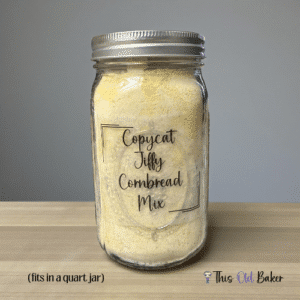
Copycat Jiffy Cornbread Mix
Equipment
Ingredients
- 2 cups all-purpose flour
- 1½ cups fine yellow cornmeal
- ¾ cup granulated sugar
- 2 teaspoons baking powder
- 1 teaspoon baking soda
- 1¼ teaspoons salt
Instructions
- 2 cups dry mix
- 1 large egg
- ⅔ cup milk
- ⅓ cup oil or melted butter
- Mix just until combined.
- Bake at 400°F for 18–22 minutes, until golden and set.
- Brush with butter while warm (non-negotiable).
- 📌 Yield Notes (Helpful for Your Readers)
- Each batch ≈ 1 box of store-bought Jiffy



Leave a Reply