

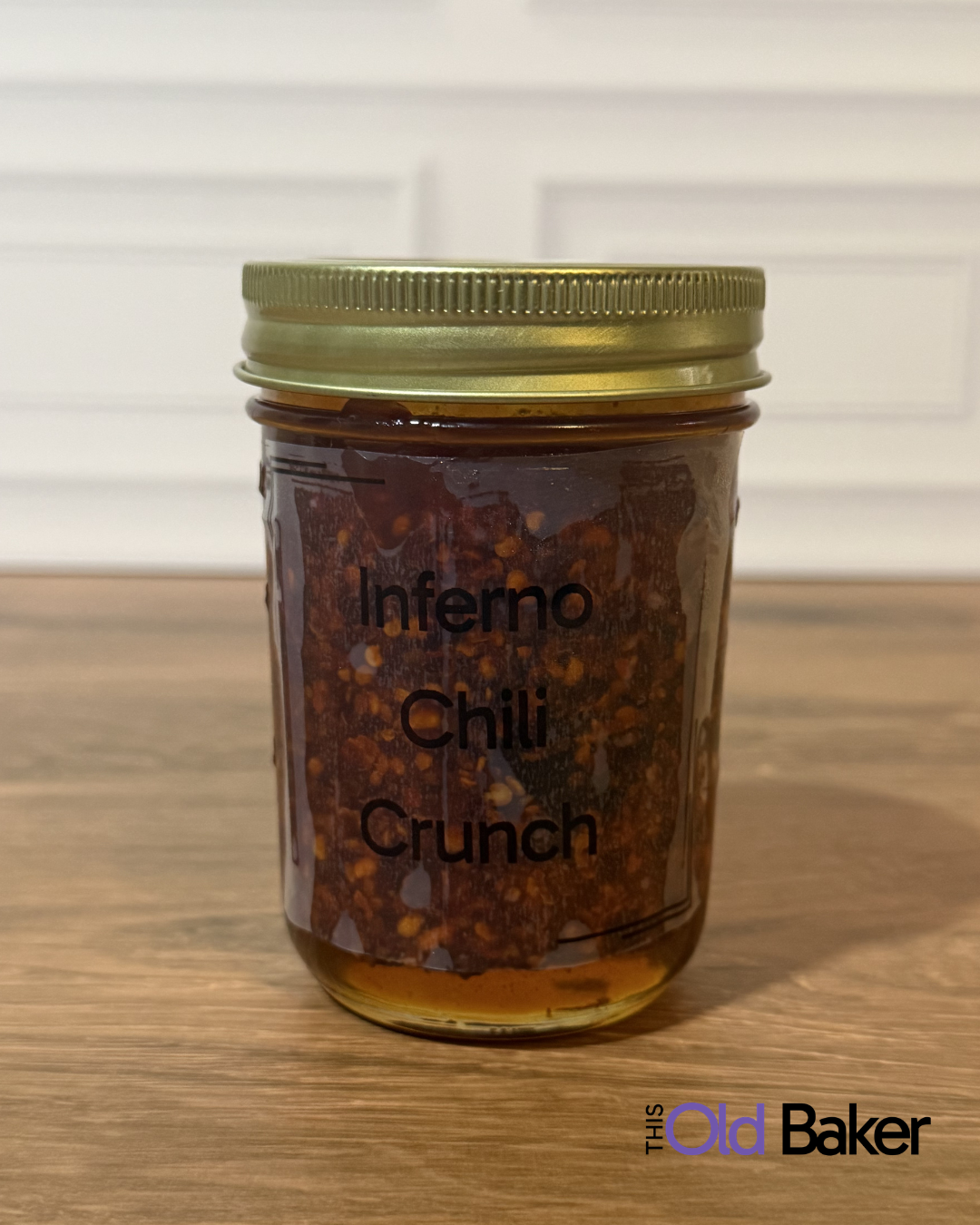
Chili crunch — the crunchy, oily, spicy condiment that started with Fly By Jing and worked its way into every kitchen that tried it once — is one of those things that’s genuinely better homemade. Not because the commercial versions are bad, but because when you make it yourself you control the heat level, the garlic ratio, the specific pepper combination, and the balance of savory depth. This recipe was inspired by the chili crunch movement that Momofuku helped bring to mainstream kitchens — but built from scratch with a heat profile that earns the Inferno name. It’s bold, complex, and legitimately hot — built on three types of heat that layer rather than compete.
One jar lasts a month in the refrigerator. In practice it will be gone much faster because once you start putting it on eggs, noodles, rice, pizza, and anything that needs a hit of something, it becomes the condiment that earns permanent real estate on the counter.
The Oil Temperature Is Everything
The entire technique of chili crunch lives or dies on oil temperature. The goal is to pour oil that’s hot enough to bloom the spices — extracting their fat-soluble flavor compounds and awakening their aroma — without scorching them.
Too cool (below 250°F): the oil doesn’t extract flavor efficiently. The spices steep rather than bloom and the result is flat and oily rather than vibrant and complex. Too hot (above 325°F): the pepper flakes scorch. Burnt chili crunch is bitter and acrid — it cannot be rescued. Scorched garlic in particular tastes aggressively unpleasant.
275°F is the target. At this temperature the oil sizzles actively when it hits the spice mixture, the garlic and sesame seeds smell toasted and fragrant rather than burnt, and the pepper flakes turn a deeper red. Use a thermometer. This is the one step where guessing is not a good strategy.
If you don’t have a thermometer: heat the oil over medium-low heat for 4 to 5 minutes. Test by dropping in a single sesame seed — it should sizzle immediately and turn golden within 10 to 15 seconds. If it sizzles and browns in 3 seconds, the oil is too hot. If it barely moves, not hot enough.
Three Types of Heat — Why Each One Is Here
This recipe uses crushed red pepper flakes, gochugaru, and cayenne plus chipotle — four heat sources that each contribute something different and produce a layered heat experience rather than a one-dimensional burn.
Crushed red pepper flakes are the backbone — sharp, immediate, and familiar. They provide the initial heat that hits first.
Gochugaru (Korean red pepper flakes) is the most distinctive ingredient in this recipe. It has a fruity, slightly sweet heat that’s noticeably different from standard red pepper flakes — milder in pure capsaicin heat but richer in flavor. It’s what gives Korean chili oil its specific character and what separates a nuanced chili crunch from a generic hot oil. It’s available at Asian grocery stores and increasingly at mainstream stores in the international aisle. Don’t substitute standard red pepper flakes for it — the flavor profile changes significantly.
Cayenne provides straight capsaicin heat with no sweetness or fruitiness — it’s the heat that builds and lingers. Chipotle powder adds a smoky dimension that deepens the overall complexity without adding more brightness. Together cayenne and chipotle extend the heat experience: cayenne is the immediate hit, chipotle is what keeps it warm after the first bite.
Two Types of Garlic — Same Logic as the Seasoning Blends
Dried minced garlic and crispy fried garlic play different roles. Dried minced garlic blooms in the hot oil, releasing its flavor into the oil base and seasoning the entire jar. Crispy fried garlic (available in jars at most grocery stores) provides texture — the crunch that gives chili crunch its name. It stays crispy even after the oil is added because it’s already been cooked and dried. Without it, you have chili oil. With it, you have chili crunch.
Don’t substitute fresh garlic in the crispy fried garlic position. Fresh garlic added to hot oil can scorch before it crisps and won’t provide the same texture. Buy the pre-fried version — it’s inexpensive and keeps indefinitely sealed.
The Mushroom Powder — The Unexpected Depth
One teaspoon of mushroom powder is the ingredient most people wouldn’t guess is here and would definitely notice if it were gone. Mushroom powder is pure umami — glutamates in concentrated dry form that add savory depth without any mushroom flavor you can specifically identify. It makes the chili crunch taste more complete and satisfying in the same way MSG makes food taste more like itself.
Mushroom powder is made from dried shiitake or porcini mushrooms ground fine. It’s available online and at specialty grocery stores. If you can’t find it, a quarter teaspoon of MSG is a direct functional substitute for the umami contribution without the mushroom connection at all.
The Finishing Ingredients
Sesame oil, rice vinegar, and soy sauce go in after the oil bloom — not before. These three are all water-based or low smoke point ingredients that don’t benefit from heat and would degrade if added to hot oil.
Sesame oil adds a toasted, nutty fragrance that’s part of the specific character of Asian-style chili crunches. Rice vinegar adds a small amount of brightness and acidity that keeps the condiment from tasting purely heavy — it’s not enough to make it taste acidic, just enough to make everything else taste cleaner. Soy sauce adds additional salt and umami depth in liquid form. Together these three are what push this from Western-style chili oil into chili crunch territory.
The Five-Minute Bloom
After pouring the hot oil, stir well and leave it alone for five minutes before adding the finishing ingredients. The bloom is an active process — the hot oil is extracting color, flavor, and aroma compounds from every spice in the bowl while the temperature slowly drops. Stirring constantly interrupts this. One good stir right after pouring, then five minutes undisturbed, then the finishing ingredients.
The mixture should look darker and smell intensely fragrant after the bloom — the pepper flakes a deeper red, the garlic slightly golden, the sesame seeds toasted. If it smells burnt rather than fragrant, the oil was too hot. If it smells like nothing happened, the oil was too cool.
Heat Level and Adjustments
As written, this is genuinely hot — it earns the Inferno name. For a milder version that still has character: reduce the crushed red pepper flakes to 1½ tablespoons, skip the cayenne, and keep everything else. The gochugaru and chipotle provide warmth without the spike. For maximum heat: add a half teaspoon of ghost pepper powder or habanero powder to the spice mixture. Increase cayenne to 1½ teaspoons.
The heat mellows slightly over the first two to three days in the refrigerator as the flavors integrate — the jar is noticeably hotter the day it’s made than it is on day four.
Where to Use It
Eggs — fried, scrambled, or poached. The oil and crunch on a runny egg is the application that converts people.
Noodles — toss with cooked ramen, lo mein, or any pasta. A tablespoon of chili crunch, a splash of soy sauce, and a squeeze of lime over noodles is dinner in five minutes.
Rice — a spoonful over plain steamed rice makes it worth eating. The crispy garlic and sesame seeds provide the texture that plain rice doesn’t have.
Pizza — in place of or alongside red pepper flakes. The oil soaks into the crust and the crunch stays on top.
Avocado toast — a drizzle over smashed avocado with flaky salt. The heat and fat combination against the richness of avocado is excellent.
Soups and stews — stir a teaspoon into the finished bowl rather than during cooking. The crunch stays intact and the oil floats on top.
Dipping sauce — thin with a splash of rice vinegar and a little honey for a dipping sauce for dumplings, spring rolls, or grilled chicken.
Cheese and crackers — a small amount on a cheese board. The heat and the savory depth against mild cheese is a combination that gets noticed.
Storage
Half-pint mason jar, tightly covered, in the refrigerator for up to one month. The oil will solidify slightly when cold — that’s normal. Let it come to room temperature for a few minutes or spoon from the top of the jar where it stays more liquid. Stir before each use to redistribute the settled spices. The flavor deepens over the first week as everything integrates.
If you’re building out the heat side of your spice pantry, the Red Jalapeño Garlic Seasoning Blend — thisoldbaker.com/red-jalapeno-garlic-seasoning is the dry rub counterpart to this — same bold garlic and jalapeño territory, different format and application.
Frequently Asked Questions
What is chili crunch?
Chili crunch is a spiced oil condiment made by pouring hot oil over a mixture of dried chilies, garlic, sesame seeds, and seasonings. The hot oil blooms the spices — extracting their fat-soluble flavors and creating a fragrant, flavorful oil — while the crunchy elements (crispy fried garlic, sesame seeds) stay textural. It’s used as a condiment, drizzle, and flavoring across eggs, noodles, rice, pizza, and anything that needs heat and depth.
What temperature should the oil be for chili crunch?
275°F is the target. This is hot enough to bloom the spices — extracting their flavor compounds and awakening their aroma — without scorching the pepper flakes or garlic. Below 250°F the oil doesn’t extract flavor efficiently; above 325°F the spices scorch. Use a thermometer for accuracy. Without one: heat oil over medium-low for 4 to 5 minutes and test with a sesame seed — it should sizzle and turn golden in 10 to 15 seconds.
What is gochugaru and can I substitute it?
Gochugaru is Korean red pepper flakes — coarser than regular crushed red pepper flakes with a fruity, slightly sweet heat that’s milder in pure capsaicin than standard pepper flakes but richer in flavor. It’s what gives Korean-style chili oils their specific character. Available at Asian grocery stores and increasingly at mainstream stores in the international aisle. Don’t substitute standard red pepper flakes at the same ratio — the flavor profile changes significantly and the heat will increase. If you can’t find it, use half the amount of standard red pepper flakes as a rough substitute.
What does mushroom powder do in chili crunch?
Mushroom powder adds concentrated umami — the savory depth that makes food taste more satisfying and complete. At one teaspoon it doesn’t make the chili crunch taste like mushrooms; it makes everything else taste more developed and rich. It’s the same role MSG plays in Chinese restaurant cooking, using glutamates from dried mushrooms instead of a synthesized source. If you can’t find mushroom powder, a quarter teaspoon of MSG is a direct functional substitute.
Can I make chili crunch less hot?
Yes — reduce the crushed red pepper flakes to 1½ tablespoons and omit the cayenne for a significantly milder version that still has warmth and character from the gochugaru and chipotle. The gochugaru provides a fruity, rounded heat that’s accessible to most people; the cayenne is what takes it to Inferno level. Keep the chipotle for the smoky depth without the heat spike.
How long does homemade chili crunch last?
Up to one month in a tightly covered jar in the refrigerator. The oil solidifies slightly when cold — let it come to room temperature briefly or spoon from the top where it stays more liquid. Stir before each use. The flavor deepens over the first week as everything integrates. If the oil smells rancid or off at any point, discard.
Infero Chili Crunch
Equipment
Ingredients
- ½ cup avocado oil or grapeseed oil
- 3 tablespoons crushed red pepper flakes
- 2 tablespoons gochugaru Korean red pepper flakes
- 1 tablespoon dried minced garlic
- 1 tablespoon crispy fried garlic
- 2 teaspoons dried minced onion
- 2 teaspoons toasted sesame seeds
- 2 teaspoons smoked paprika
- 1 teaspoon cayenne pepper
- 1 teaspoon chipotle powder
- 1 teaspoon mushroom powder
- ½ teaspoon kosher salt
- ½ teaspoon black pepper
- 1 tablespoon sesame oil
- 2 teaspoons rice vinegar
- 1 teaspoon soy sauce
Instructions
- Heat the avocado oil in a small saucepan over medium-low heat until it reaches approximately 275°F. Do not allow the oil to smoke.
- In a heatproof bowl, combine the crushed red pepper flakes, gochugaru, dried garlic, crispy fried garlic, onion, sesame seeds, smoked paprika, cayenne, chipotle powder, mushroom powder, salt, and black pepper.
- Carefully pour the hot oil over the spice mixture and stir well. Allow it to bloom for 5 minutes.
- Stir in the sesame oil, rice vinegar, and soy sauce until fully incorporated.
- Allow the chili crunch to cool completely before transferring it to a clean half-pint mason jar.
- Storage
- Store tightly covered in the refrigerator for up to 1 month.
- Stir before each use.
Notes
Stir into mayonnaise for a fiery sandwich spread.
Spoon over cream cheese for an easy appetizer.
Toss with roasted potatoes or Brussels sprouts.
Drizzle over grilled meats just before serving.


Leave a Reply