

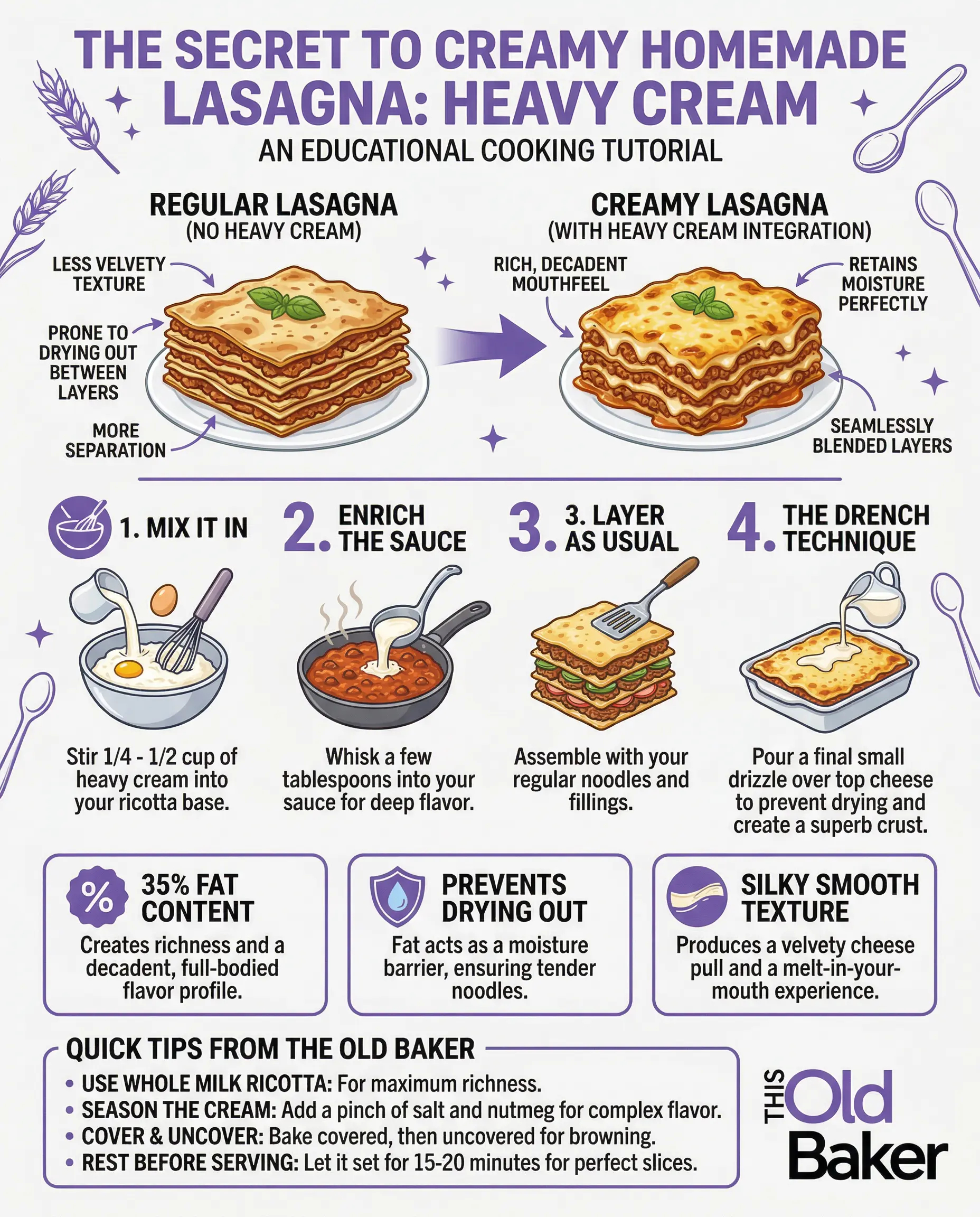
If you’ve ever wondered why lasagna from a restaurant tastes so much richer, creamier, and more luxurious than the version you make at home, the answer might surprise you. Many professional kitchens rely on a simple but powerful trick: heavy cream. While traditional lasagna recipes often rely on ricotta cheese, béchamel sauce, or cottage cheese for creaminess, a small amount of heavy cream can transform the texture of the dish into something incredibly silky and indulgent. It’s one of those quiet techniques chefs use behind the scenes to elevate a classic comfort food.
Why Restaurant Lasagna Tastes Different
Restaurant kitchens approach lasagna with a slightly different mindset than most home cooks. Instead of focusing only on the layers of noodles, meat sauce, and cheese, chefs think carefully about texture and moisture balance. Lasagna has a lot of components, and if those components aren’t balanced correctly, the dish can turn out dry, dense, or overly heavy.
Heavy cream solves several of these problems at once. It adds richness without making the dish watery, and it helps bind the cheeses and sauces together so each bite feels smooth and cohesive. Because heavy cream contains a higher percentage of fat than milk, it creates a velvety mouthfeel that feels more like something you’d find in a restaurant.
The result is lasagna that slices beautifully, holds its shape, and still tastes creamy and luxurious.
The Role of Fat in Creamy Dishes
Fat is one of the most important elements in cooking when it comes to flavor and texture. Heavy cream contains roughly 36–40% milk fat, which gives it the ability to enrich sauces and soften the structure of other ingredients.
In lasagna, that fat works with the cheese and tomato sauce to create a smoother, more balanced dish. Without enough fat, the layers can feel dry or grainy. With heavy cream added to the mix, everything blends together more evenly.
That’s why restaurant versions of many dishes—pasta sauces, soups, casseroles, and baked pastas—often taste fuller and richer than homemade versions. A small amount of cream can dramatically change the final result.
How Heavy Cream Enhances Cheese
Lasagna typically uses cheeses like ricotta, mozzarella, and parmesan. Each one plays a different role. Ricotta provides body, mozzarella adds stretch and melt, and parmesan delivers salty, savory depth.
Heavy cream helps all of these cheeses work together more smoothly. When mixed into the ricotta layer or sauce, cream softens the texture and prevents the cheese from becoming too thick or grainy during baking.
It also encourages better melting. When cheese bakes with cream, the fat helps the proteins relax and spread evenly through the layers. The result is a lasagna that feels creamy instead of clumpy.
Preventing Dry Lasagna
One of the most common problems with homemade lasagna is dryness. Even when there’s plenty of sauce in the pan, the noodles and cheeses can absorb moisture as the dish bakes, leaving the final result a bit stiff.
Heavy cream helps counteract that issue. Because it’s rich and stable under heat, it maintains its texture while baking and keeps the layers moist without thinning the sauce too much.
This is especially helpful when using oven-ready noodles or when reheating lasagna the next day. Cream helps the dish stay soft and enjoyable instead of turning dense.
A Subtle Flavor Boost
Heavy cream doesn’t just affect texture—it also influences flavor. Its mild sweetness softens the acidity of tomato sauce and balances the saltiness of the cheeses.
This creates a more rounded flavor profile overall. Instead of tasting sharply acidic or overly cheesy, the lasagna feels harmonious and rich.
Restaurants often rely on subtle adjustments like this to create dishes that taste deeper and more satisfying without making them complicated.
Where Restaurants Use the Cream
Different kitchens incorporate cream into lasagna in slightly different ways. Some chefs mix it directly into the ricotta layer, while others add a splash to the meat sauce as it simmers.
Another common approach is to drizzle a small amount of cream over the top layer before baking. As the lasagna cooks, the cream blends into the sauce and cheese, creating a beautifully creamy finish.
In more traditional Italian-style kitchens, cream might be incorporated into a béchamel sauce that replaces the ricotta layer entirely. This creates a silky white layer that melts into the rest of the dish during baking.
No matter which method is used, the goal is always the same: a smoother, richer lasagna.
Why Home Cooks Often Skip This Step
Many classic lasagna recipes passed down through families don’t include heavy cream at all. Instead, they rely on ricotta cheese alone for creaminess. While those recipes can still produce delicious results, they often lack the silky texture that restaurant versions achieve.
Another reason cream isn’t always used at home is simply habit. Many people stick closely to the recipes they grew up with, and small chef-style tweaks like adding cream aren’t always widely known.
But once you try it, the difference can be noticeable. The lasagna becomes softer, richer, and more cohesive.
The Balance Matters
Of course, the goal isn’t to turn lasagna into a bowl of cream. The trick is moderation. A small amount is usually enough to enhance the dish without overwhelming it.
When used thoughtfully, cream acts more like a supporting ingredient rather than the star of the show. The tomato sauce, pasta, meat, and cheeses still carry the main flavors. The cream simply ties everything together.
This kind of balance is exactly what professional chefs focus on when building layered dishes like lasagna.
Elevating a Classic Comfort Food
Lasagna is one of those timeless meals that brings people together around the table. It’s hearty, comforting, and perfect for family dinners, potlucks, and holidays. Adding heavy cream doesn’t change the soul of the dish—it simply refines it.
That small adjustment can take a familiar comfort food and give it a restaurant-quality finish. The layers feel smoother, the sauce tastes richer, and each bite becomes a little more indulgent.
For anyone looking to recreate that creamy, satisfying lasagna experience at home, the secret isn’t complicated or expensive. Sometimes it’s just a matter of learning the little tricks chefs have used for years.
And one of the simplest tricks of all might just be a splash of heavy cream. Printable guide downloadable here.
Creamy Restaurant-Style Lasagna
Equipment
Ingredients
Meat Sauce
- 1 lb ground beef or Italian sausage
- 1 small onion diced
- 3 cloves garlic minced
- 1 24 oz jar marinara sauce
- ½ cup heavy cream
- 1 teaspoon Italian seasoning
- Salt and black pepper to taste
Cheese Layer
- 1½ cups ricotta cheese
- ½ cup heavy cream
- 1 large egg
- ½ cup grated Parmesan cheese
- 1 teaspoon garlic powder
- 1 teaspoon dried parsley
Assembly
- 9 lasagna noodles cooked (or oven-ready noodles) up to 12 noodles
- 2 cups shredded mozzarella cheese
- Extra Parmesan for topping
Instructions
Prepare the Meat Sauce
- In a large skillet over medium heat, cook the ground beef or sausage with the diced onion until browned and fully cooked. Drain any excess grease. Add the garlic and cook for about 30 seconds until fragrant.
- Stir in the marinara sauce, heavy cream, Italian seasoning, salt, and pepper. Let the sauce simmer for about 5 minutes so the flavors blend together.
Make the Creamy Cheese Filling
- In a medium bowl, combine the ricotta cheese, heavy cream, egg, Parmesan cheese, garlic powder, and parsley. Stir until smooth and well mixed. The cream helps loosen the ricotta and creates a silky texture.
Preheat the Oven
- Preheat your oven to 375°F (190°C). Lightly grease a 9×13 baking dish.
Build the Layers
- Spread a thin layer of the meat sauce on the bottom of the baking dish.
- Layer in this order:
- Lasagna noodles
- Ricotta cream mixture
- Meat sauce
- Mozzarella cheese
- Repeat the layers until the dish is filled, finishing with meat sauce and mozzarella on top.
Bake the Lasagna
- Cover the dish with foil and bake for 30 minutes. Remove the foil and bake another 10–15 minutes until the cheese is melted and lightly golden.
Let It Rest
- Allow the lasagna to rest for 10–15 minutes before slicing. This helps the layers set and makes serving easier.





Leave a Reply