

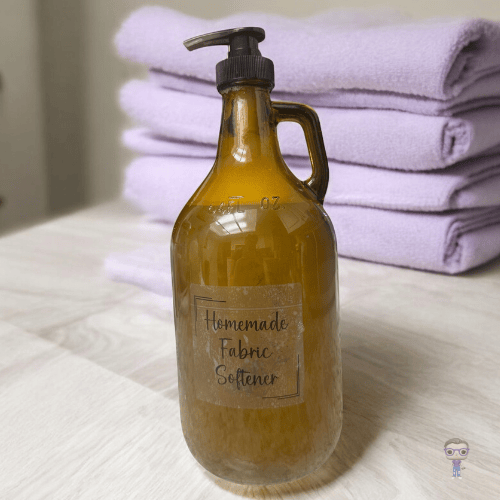
There’s something deeply comforting about laundry that smells like you made it — not a chemical factory. Homemade fabric softener brings that feeling home again. It’s gentle, customizable, and kinder to your clothes, your wallet, and the environment.
You don’t need fancy ingredients, and you don’t need a chemistry degree — just a pinch of old-fashioned common sense and the desire to make your home smell like clean linen and calm.
Why Make Your Homemade Fabric Softener?
Let’s be honest — commercial fabric softeners have gotten… intense. The fragrances linger for days, the ingredient labels read like lab experiments, and the price tags keep creeping up.
When you make your own, you get to control what goes on your clothes and against your skin. That’s especially important if anyone in your household has allergies, eczema, or sensitivity to perfumes.
Homemade fabric softener is:
- Nontoxic — no harsh chemicals, synthetic dyes, or artificial fragrances.
- Eco-friendly — biodegradable ingredients that won’t clog up waterways.
- Budget-friendly — pennies per load instead of dollars.
- Customizable — use essential oils for scent, or leave it fragrance-free for ultra-sensitive laundry.
In short, it’s laundry the way Grandma used to do it — simple, clean, and satisfying.
The Science Behind Soft Clothes
You might wonder what fabric softener actually does.
Traditional store-bought versions coat fabric fibers in a thin layer of chemical lubricants — usually silicone or quaternary ammonium compounds. That coating reduces static cling and makes the fibers feel smoother.
Homemade fabric softeners skip the chemical coating. Instead, they naturally soften fabrics by:
- Balancing the pH level during the rinse cycle (reduces stiffness).
- Breaking down detergent residue left on clothes.
- Helping fibers relax as they dry.
It’s not magic — it’s mild chemistry, using ingredients you probably already have in your pantry.
Optional Scents and Essential Oils
If you love a bit of fragrance in your laundry, essential oils are the perfect natural touch. A few drops can make your sheets smell like a summer meadow, or your towels like a cozy cabin after the rain.
Popular scent blends:
- Lavender + Lemon for a fresh, calming scent.
- Eucalyptus + Mint for that spa-day crispness.
- Orange + Clove for warm, cozy laundry days.
- Rose + Geranium for something a little more vintage.
Tip: Always add essential oils sparingly — about 10–20 drops for a batch of softener or per dryer load. More isn’t better; it can actually make fabrics feel oily over time.
If you prefer no scent at all, skip them — your clothes will still come out clean, soft, and static-free.
The Hidden Benefits of Homemade
Better for Sensitive Skin
Store-bought softeners can leave behind residues that irritate skin or trigger allergic reactions. Homemade fabric softeners are simple, usually using just a few safe ingredients like baking soda, vinegar, or Epsom salts.
No Gunky Build-Up in Your Washer
Commercial softeners can leave behind waxy residue that clogs washers and traps odor. Homemade versions rinse clean — so your washer stays fresher, longer.
Preserves Fabric Life
Harsh chemicals can wear down natural fibers. Homemade softener helps clothes keep their shape and softness, especially for cottons, linens, and delicates.
Naturally Controls Static
When you balance fabric pH and rinse clean, you cut static naturally — no need for chemical sheets or waxy coatings.
Saves Money (and Shelf Space)
One small jar or bottle of homemade softener goes a long way — no bulky bottles, no repeat purchases.
Fabric Softener vs. Fabric Conditioner
You’ll see both names tossed around — but they’re not exactly the same.
- Fabric softeners reduce static and make clothes feel softer.
- Fabric conditioners do the same thing, but often include chemicals to “protect” fibers or lock in color.
Your homemade fabric softener acts as both — softening, deodorizing, and conditioning naturally without those additives.
Store-Bought vs. Homemade: A Quick Comparison
| Feature | Store-Bought | Homemade |
|---|---|---|
| Cost per load | $0.20–$0.35 | $0.02–$0.05 |
| Scent | Strong, synthetic | Light or natural (your choice) |
| Residue | Can coat fibers | Rinses clean |
| Ingredients | Chemical-based | Pantry staples |
| Skin safety | May irritate | Gentle and natural |
| Eco impact | Non-biodegradable | Earth-friendly |
When Not to Use Fabric Softener
Here’s where old-fashioned laundry know-how still holds true:
Don’t use any fabric softener (store-bought or homemade) on:
- Towels: It can reduce absorbency.
- Microfiber cloths: It breaks down the static that makes them effective.
- Athletic wear: Coatings block moisture-wicking.
- Flame-resistant clothing: It can interfere with safety properties.
Otherwise, you can use homemade softener on just about everything — from sheets and clothes to blankets and curtains.
How to Use It
Homemade fabric softeners work best in the rinse cycle of your wash.
If you’re using a top-loading washer, add about ½ cup to the rinse water.
For HE machines, pour it into the softener compartment — no extra steps needed.
If you’re using dryer balls, add a few drops of essential oil to those instead of directly to the load — it’s a cleaner, longer-lasting way to scent fabrics naturally.
Storage and Shelf Life
Homemade fabric softener can be stored for several months in a glass or plastic bottle with a tight lid. Keep it in a cool, dark spot — essential oils last longer when protected from light.
If your mix starts to separate or settle, just give it a gentle shake before using.
And here’s a bonus: You can make a small batch at a time so it’s always fresh — no more forgotten bottles collecting dust under the laundry sink.
The Real Reason It Matters
At its heart, making your own fabric softener isn’t just about thrift or clean laundry — it’s about intentional living. It’s the kind of small domestic act that connects you to your home, your routines, and your roots.
Every time you measure out a batch, you’re saying, “I can do this myself.”
That quiet confidence builds one jar, one mix, one clean load at a time.
And when your laundry smells softly of lavender and sunshine — or simply of nothing at all — you’ll know it’s truly clean.
No residues. No mystery chemicals. Just that warm, fresh, from-scratch feeling that makes a house feel like home.
So the next time you toss in a load, skip the neon-blue bottle and try homemade instead. Your skin, your washer, and even your wallet will thank you — and your laundry will smell just like you made it yourself.
Homemade Fabric Softener
Ingredients
- ½ to ¾ gallon white vinegar
- ¼ cup natural silicone-free hair conditioner (choose a scent you love)
- 10 to 20 drops grapefruit essential oil OPTIONAL if sensitive.
- 10 to 20 drops lemon essential oil OPTIONAL if sensitive.
Instructions
- In a large bowl or measuring cup, mix the conditioner with 1–2 cups of vinegar until fully combined.
- Add essential oils and stir well.
- Pour the mixture into a 64 oz bottle, then top off with the remaining vinegar. Shake gently to mix.
- 🫧To Use:
- Add ¼ cup (about 10 pumps) to your washer’s fabric softener compartment for fresh, fluffy laundry with a bright citrus scent.

Leave a Reply