


If you’ve got dry milk in your pantry, you’ve got one of the most useful ingredients in your kitchen.
Most people only think of it as a backup for when they run out of milk. But once you start using it on purpose, it becomes something you rely on. It can replace milk, cream, and even help build sauces, mixes, and baked goods without needing anything fresh.
And that’s what makes it so practical—it works with real life.
Start With This Simple Rule
Before anything else, here’s the only thing you really need to remember:
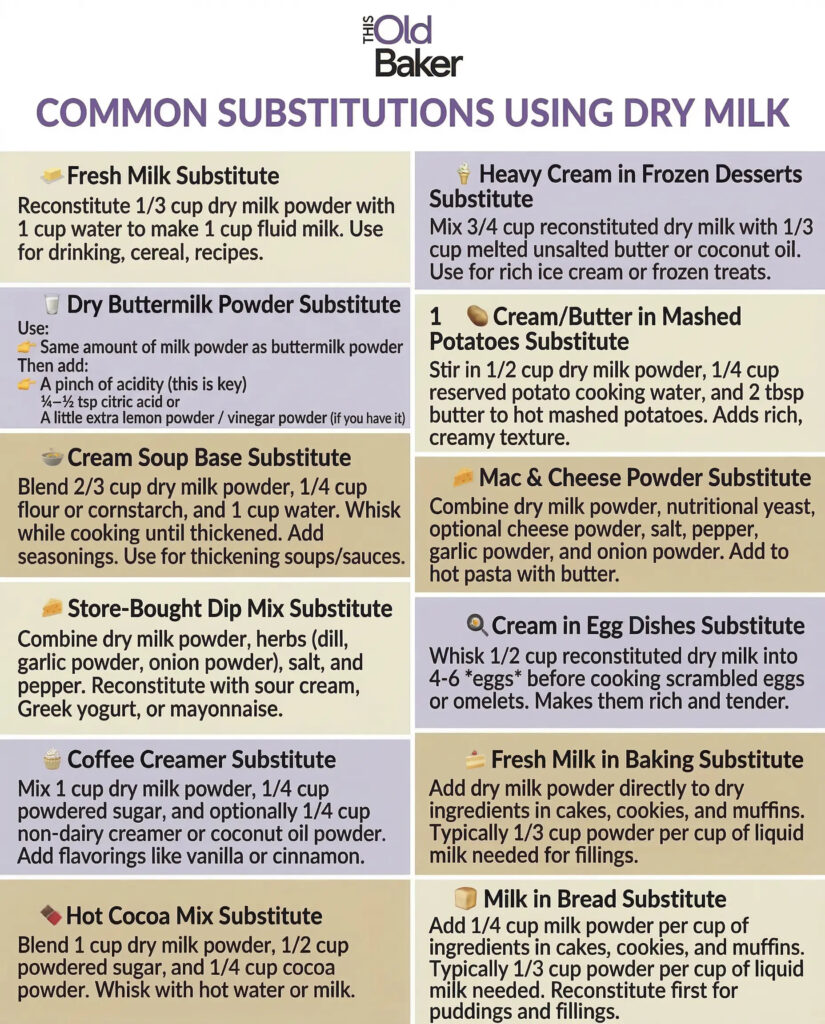
Dry milk + water = milk
A standard mix is:
- 1/3 cup dry milk
- 1 cup water
That gives you a basic milk substitute you can use for drinking, cereal, or recipes. If you chill it first, the flavor improves and feels closer to fresh milk.
From there, you can adjust. Less water gives you something thicker, while adding the powder directly to dry ingredients lets you control texture without extra liquid.
Turning It Into What You Actually Need
Once you’ve got your basic milk, it’s easy to turn it into something else.
If you need buttermilk, you don’t need a separate product. Just add a little acidity—vinegar, lemon juice, or even citric acid—to your prepared milk. Let it sit for a few minutes, and it develops that tang you need for pancakes, biscuits, and baking.
That same idea applies in reverse too. If a recipe calls for buttermilk powder, you can use regular dry milk and add that bit of acid to get the same result.
Building Creamy Bases From Scratch
This is where dry milk really starts replacing store-bought shortcuts.
Instead of reaching for a can of cream soup, you can make your own base with dry milk, water, and a thickener like flour or cornstarch. As it cooks, it thickens into a creamy mixture that works just like a canned soup in casseroles or sauces.
The same thing works for dips. Dry milk combined with simple seasonings—garlic, onion, herbs, salt, and pepper—creates a dry mix you can keep on hand. When you’re ready to use it, just stir it into sour cream, yogurt, or even mayonnaise for a quick dip.
It’s simple, shelf-stable, and easy to customize.
Pantry Mixes That Make Life Easier
Dry milk really shines when you start using it in mixes.
You can build your own coffee creamer with dry milk, a little powdered sugar, and flavorings like vanilla or cinnamon. You can mix up a batch of hot cocoa with cocoa powder and sugar that only needs hot water when you’re ready.
Even something like mac and cheese can be made into a pantry mix. Combine dry milk with cheese powder or nutritional yeast and a few seasonings, and you’ve got a base you can add to pasta with butter and water.
These are the kinds of shortcuts that save time without sacrificing quality.
Adding Creaminess Without Extra Liquid
One of the biggest advantages of dry milk is how it adds richness without thinning things out.
In mashed potatoes, you can stir in dry milk along with a little potato water and butter to create a creamy texture without making them runny. In eggs, whisking in prepared dry milk before cooking gives you softer, more tender scrambled eggs and omelets.
In bread, adding dry milk directly to the flour improves both texture and color. It helps create a softer crumb and better browning without needing fresh milk at all.
And in baking, you’ve got options. You can either reconstitute dry milk and use it normally, or add the powder directly to your dry ingredients and use water as the liquid.
Replacing Cream When You Need It
Dry milk can also step in when you need something richer.
For frozen desserts, you can combine prepared dry milk with melted butter or coconut oil to mimic the richness of heavy cream. This works especially well in homemade ice cream or frozen treats where you want that creamy texture without actual cream.
It’s not an exact replacement, but it gets you close enough—and it works when you need it.
The Everyday Uses That Add Up
Beyond the bigger substitutions, there are smaller ways to use dry milk that make a difference over time.
You can stir it into oatmeal for a creamier, more filling breakfast. Add it to smoothies for extra protein and body. Mix up a quick glass for cereal without opening fresh milk.
It also works well in custards, puddings, and sauces, where it helps create a thicker, smoother texture without needing additional dairy.
Even adding a little to seasoning blends can give them a more complete, creamy flavor.
Cooking Without the Last-Minute Store Run
This is where dry milk really proves its value.
You don’t have to plan around having milk in the fridge. You don’t have to stop what you’re doing because you’re missing one ingredient. You can just make what you need.
Whether it’s building a sauce, mixing up batter, or putting together a quick meal, dry milk gives you flexibility.
And that’s what makes it worth keeping on hand.
Keep It Simple
You don’t need to use every method right away.
Start with:
- Using it as milk
- Trying it in baking
- Adding it to mashed potatoes
Once you see how it works, it becomes second nature.
Why This One Staple Is Worth It
Dry milk isn’t flashy, but it’s reliable.
It helps you:
- Stretch your grocery budget
- Reduce waste
- Build pantry mixes
- Cook without fresh dairy
And once you start using it regularly, it becomes part of how you cook—not just something you store.
Download this easy PDF guide below. Click image.




Leave a Reply