

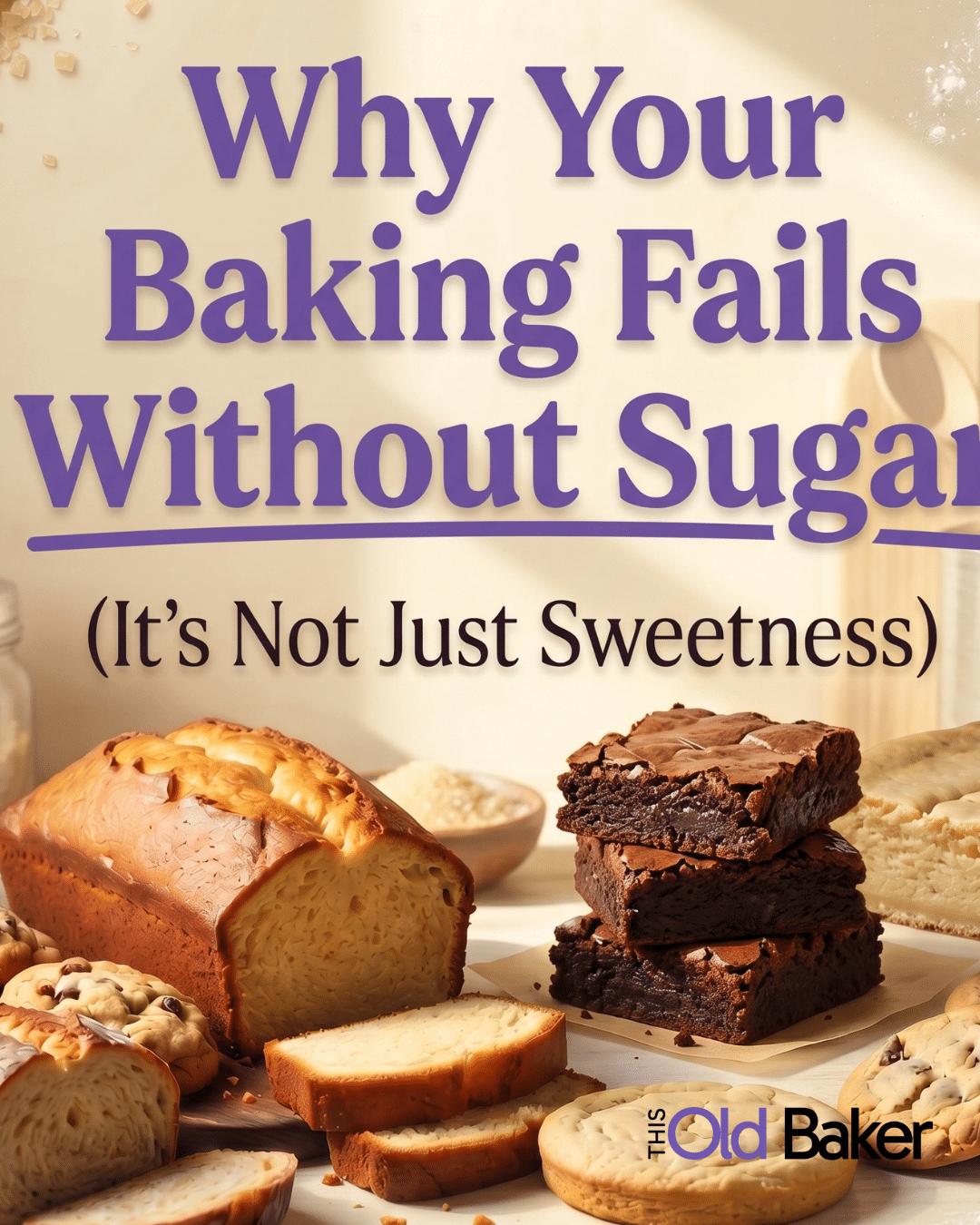
It’s one of the main ingredients that makes things turn out the way you expect.
Sugar does more than you think
When you bake, sugar is doing a lot behind the scenes.
It affects:
- flavor
- texture
- moisture
- color
- structure
Take it out, and everything changes.
Not just a little. A lot.
It balances flavor
Most baking ingredients don’t taste great on their own.
Flour is bland.
Cocoa is bitter.
Baking soda and baking powder can leave odd flavors if not balanced.
Sugar smooths everything out.
It brings flavors together and makes them taste complete.
That’s why:
- chocolate tastes rich instead of bitter
- vanilla tastes warm instead of flat
Without sugar, baked goods can taste harsh or unfinished.
It keeps things soft and moist
Sugar holds onto moisture.
That’s a big deal in baking.
It helps:
- cakes stay soft
- cookies stay chewy
- muffins stay tender
When you reduce or remove sugar, you lose that moisture.
That’s when things start to feel:
- dry
- crumbly
- or stale faster
If you’ve ever had a “healthy” baked good that felt dry…
chances are, it didn’t have enough sugar (or a proper replacement).
It controls texture
Sugar works with butter and eggs to build texture.
It helps baked goods:
- stay tender
- avoid being tough
- have that soft bite people expect
In cookies, sugar helps create:
- crisp edges
- soft centers
In cakes, it helps create:
- a fine, even crumb
- a light texture instead of dense
Without enough sugar, things can turn out:
- dense
- rubbery
- or oddly firm
It helps with browning and flavor
That golden color on cookies and cakes?
That’s sugar reacting to heat.
As sugar heats up, it caramelizes.
That creates:
- color
- deeper flavor
- that “fresh baked” taste
Without sugar:
- baked goods stay pale
- flavor is more basic
- you lose that slightly toasty finish
That’s why low-sugar baking often looks lighter and tastes less rich.
It creates that crackly top
If you’ve ever made brownies, you know that shiny, slightly crisp top.
That comes from sugar.
When sugar dissolves and bakes with eggs, it creates that thin, crackly layer.
Without enough sugar:
- brownies look dull
- the top stays soft instead of crisp
- texture feels different overall
It’s a small detail, but people notice it.
It helps cookies spread
Sugar melts as it bakes.
That helps cookies spread out on the pan.
This gives you:
- even baking
- the right thickness
- that classic cookie shape
Without enough sugar:
- cookies stay thick
- sometimes turn out like little cakes
- texture can feel heavy
That’s why “low sugar” cookies often don’t look or feel the same.
It helps baked goods stay fresh
Sugar slows down staling.
Because it holds moisture, it keeps baked goods soft longer.
With enough sugar:
- cookies stay chewy for days
- cakes don’t dry out as quickly
Without it:
- things go stale faster
- texture changes within a day or two
If you’re baking ahead, this matters a lot.
Sugar affects structure too
Sugar isn’t just sitting there—it’s part of how everything sets.
It works with:
- eggs
- flour
- fat
to create the final texture.
Change the sugar, and you change how the whole recipe behaves.
That’s why you can’t always just “leave it out” and expect the same result.
What happens when you remove sugar completely
If you take sugar out entirely, baked goods often turn out:
- less flavorful
- more dry
- dense or rubbery
- pale in color
- missing that classic texture
It’s not just less sweet.
It’s a different product.
Better Option: reduce, don’t remove
If you want to cut back on sugar, that’s fine.
But it’s better to reduce it slowly instead of removing it completely.
Start by cutting:
- about 10–20%
Then test from there.
That usually keeps:
- texture
- moisture
- structure
close to what you expect.
Other Sweeteners (with adjustments)
Different sweeteners behave differently.
For example:
- Brown sugar → adds moisture and a deeper flavor
- Honey or maple syrup → adds liquid, so you may need less milk or water
- Sugar substitutes → may not brown the same or give the same texture
There’s no one-to-one swap that works perfectly every time.
You have to adjust based on what you’re using.
Flavor Can Help Reduce Sugar
If you want something to taste sweeter without adding more sugar, you can boost flavor.
Try:
- vanilla
- cinnamon
- a pinch of salt
These don’t replace sugar, but they help bring out sweetness.
Real-life Baking Matters
Most people aren’t baking in perfect conditions.
They’re:
- cooking between work and dinner
- baking with what they have on hand
- trying to make things work without wasting ingredients
That’s why understanding sugar matters.
It helps you:
- fix recipes
- adjust ingredients
- avoid wasting time and money
Simple Takeaway
Sugar affects:
- taste
- texture
- moisture
- color
- shelf life
It’s one of the main ingredients that makes baked goods work.
The Truth
Sugar isn’t just “extra.”
It’s part of what makes baked goods:
- soft
- rich
- and worth eating
Take it out completely…
and you’re not really making the same thing anymore.


Leave a Reply