

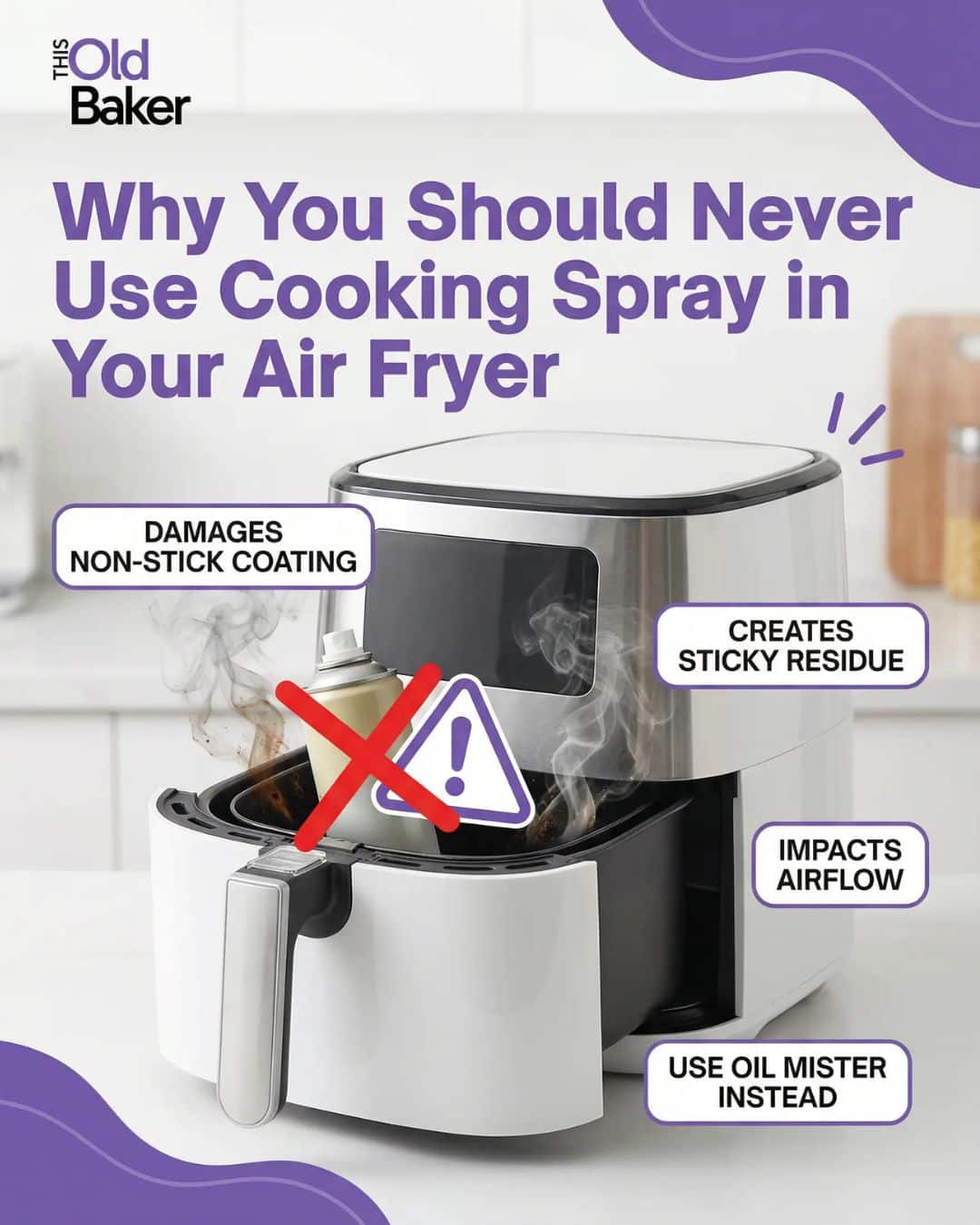
If you’ve recently joined the air fryer fan club (welcome, friend), you’ve probably done what many of us instinctively do when cooking: grabbed a can of nonstick cooking spray and gave the basket a good spritz. Harmless, right? Unfortunately, using cooking spray in your air fryer is one of the quickest ways to ruin it.
I know—it feels like a betrayal. That little can of spray has always been there for you, from scrambled eggs to roasted veggies. But when it comes to air fryers, that trusty aerosol can is more foe than friend. Here’s everything you need to know about why cooking spray is a big no-no, what it does to your air fryer, and the better options your crispy dreams deserve.
The Big Problem: Cooking Spray Damages the Nonstick Coating
Most air fryer baskets and trays are coated with a nonstick finish, often Teflon or a ceramic-based coating. This makes cleanup easier and keeps your food from becoming a glued-on science experiment.
But here’s the kicker: propellants and additives in commercial cooking sprays—like lecithin and dimethyl silicone—can build up on that nonstick surface. Over time, they create a sticky, gunky layer that’s nearly impossible to clean and leads to permanent residue or peeling.
Once that nonstick coating starts to degrade? Say goodbye to evenly cooked food and easy cleanup. Say hello to rust, sticking, and possibly shelling out cash for a replacement basket.
Common Signs You’ve Damaged Your Air Fryer with Cooking Spray
If you’ve been unknowingly mistreating your air fryer, here are the red flags:
- Sticky brown buildup on the basket or tray
- Peeling or flaking nonstick surface
- Food that suddenly starts sticking where it never did before
- A weird burnt smell when you use it
If any of those sound familiar and you’ve been using aerosol spray oils… well, now you know who the culprit is.
But Why Is It Okay in a Regular Pan?
You might be wondering, “Why can I use cooking spray in a skillet but not in my air fryer?” Good question.
The difference is in heat intensity and proximity. In an air fryer, food and spray sit closer to the heating element, and airflow is super concentrated. That means the oil—and the additives—cook fast and hard. What doesn’t burn onto your food, burns onto your basket.
In a skillet, there’s more space, more surface area, and better oil distribution. Plus, you’re stirring or flipping constantly, which reduces the chances of buildup. In an air fryer? Everything just sits there and bakes on.
Better Alternatives: What to Use Instead
Here’s the good news: You don’t need to go dry. You just need to use the right oils the right way.
1. High-Quality Oil Misters
Invest in a reusable oil mister or spray bottle. Fill it with your favorite oils (avocado, olive, grapeseed), pump or spray a fine mist, and you’re good to go. No additives, no residue, no regrets.
Look for misters with fine spray patterns so you don’t accidentally drown your fries.
2. Brush or Toss
If you’re prepping veggies or protein, toss them with a little oil in a bowl first—or use a silicone brush to lightly coat them. This way, the oil goes on the food, not the basket.
3. Oil Towels
Want something ultra-minimal? Fold a paper towel, add a few drops of oil, and lightly rub it over the basket. It prevents sticking without excess residue.
Which Oils Are Best for Air Frying?
Since air fryers cook at high temps (typically 350–400°F), choose oils with higher smoke points to avoid burning.
Top Picks:
- Avocado oil – High smoke point, neutral flavor, great for most foods.
- Grapeseed oil – Another light, neutral oil with a high smoke point.
- Canola oil – Inexpensive, widely available, and works well under heat.
- Light olive oil – Use “light” or refined versions—not extra virgin—for better heat tolerance.
Avoid butter, coconut oil, or unrefined oils in the air fryer—they smoke too quickly and can gum up your machine.
What If You Already Used Cooking Spray?
Take a breath—it’s not the end of the world. But you’ll want to:
- Stop using the spray immediately.
- Gently clean the basket with warm, soapy water and a soft sponge.
- If buildup is present, soak it in vinegar and baking soda or use a non-abrasive degreasing solution.
- Never scrub with steel wool or anything abrasive—this just makes the damage worse.
If the coating has already started peeling, you may need to replace the basket. Some brands sell replacements; others don’t (which is a good reason to take care of yours now).
Quick Myth Buster: “I use coconut oil spray and haven’t had a problem.”
You might not yet. Some coconut oil sprays and so-called “natural” sprays still contain lecithin or silicone, which leave behind the same gunky film. It can take weeks or months to show up—but once it does, it’s hard to reverse. Better safe than scrubbing your life away.
Final Thought: Treat Your Air Fryer Like Cast Iron (Kinda)
Okay, maybe not exactly like cast iron, but your air fryer deserves a little seasoning love. Use real oil. Apply it intentionally. Avoid shortcuts in cans.
That small effort pays off in:
- Better-tasting food
- A longer-lasting machine
- And way less frustration
Once you make the switch, you’ll wonder why you ever let a can of spray near your crispy sweet potato fries.
If you’ve recently joined the air fryer fan club (welcome, friend), you’ve probably done what many of us instinctively do when cooking: grabbed a can of nonstick cooking spray and gave the basket a good spritz. Harmless, right? Unfortunately, using cooking spray in your air fryer is one of the quickest ways to ruin it.
I know—it feels like a betrayal. That little can of spray has always been there for you, from scrambled eggs to roasted veggies. But when it comes to air fryers, that trusty aerosol can is more foe than friend. Here’s everything you need to know about why cooking spray is a big no-no, what it does to your air fryer, and the better options your crispy dreams deserve.
The Big Problem: Cooking Spray Damages the Nonstick Coating
Most air fryer baskets and trays are coated with a nonstick finish, often Teflon or a ceramic-based coating. This makes cleanup easier and keeps your food from becoming a glued-on science experiment.
But here’s the kicker: propellants and additives in commercial cooking sprays—like lecithin and dimethyl silicone—can build up on that nonstick surface. Over time, they create a sticky, gunky layer that’s nearly impossible to clean and leads to permanent residue or peeling.
Once that nonstick coating starts to degrade? Say goodbye to evenly cooked food and easy cleanup. Say hello to rust, sticking, and possibly shelling out cash for a replacement basket.
Common Signs You’ve Damaged Your Air Fryer with Cooking Spray
If you’ve been unknowingly mistreating your air fryer, here are the red flags:
- Sticky brown buildup on the basket or tray
- Peeling or flaking nonstick surface
- Food that suddenly starts sticking where it never did before
- A weird burnt smell when you use it
If any of those sound familiar and you’ve been using aerosol spray oils… well, now you know who the culprit is.
But Why Is It Okay in a Regular Pan?
You might be wondering, “Why can I use cooking spray in a skillet but not in my air fryer?” Good question.
The difference is in heat intensity and proximity. In an air fryer, food and spray sit closer to the heating element, and airflow is super concentrated. That means the oil—and the additives—cook fast and hard. What doesn’t burn onto your food, burns onto your basket.
In a skillet, there’s more space, more surface area, and better oil distribution. Plus, you’re stirring or flipping constantly, which reduces the chances of buildup. In an air fryer? Everything just sits there and bakes on.
Better Alternatives: What to Use Instead
Here’s the good news: You don’t need to go dry. You just need to use the right oils the right way.
1. High-Quality Oil Misters
Invest in a reusable oil mister or spray bottle. Fill it with your favorite oils (avocado, olive, grapeseed), pump or spray a fine mist, and you’re good to go. No additives, no residue, no regrets.
Look for misters with fine spray patterns so you don’t accidentally drown your fries.
2. Brush or Toss
If you’re prepping veggies or protein, toss them with a little oil in a bowl first—or use a silicone brush to lightly coat them. This way, the oil goes on the food, not the basket.
3. Oil Towels
Want something ultra-minimal? Fold a paper towel, add a few drops of oil, and lightly rub it over the basket. It prevents sticking without excess residue.
Which Oils Are Best for Air Frying?
Since air fryers cook at high temps (typically 350–400°F), choose oils with higher smoke points to avoid burning.
Top Picks:
- Avocado oil – High smoke point, neutral flavor, great for most foods.
- Grapeseed oil – Another light, neutral oil with a high smoke point.
- Canola oil – Inexpensive, widely available, and works well under heat.
- Light olive oil – Use “light” or refined versions—not extra virgin—for better heat tolerance.
Avoid butter, coconut oil, or unrefined oils in the air fryer—they smoke too quickly and can gum up your machine.
What If You Already Used Cooking Spray?
Take a breath—it’s not the end of the world. But you’ll want to:
- Stop using the spray immediately.
- Gently clean the basket with warm, soapy water and a soft sponge.
- If buildup is present, soak it in vinegar and baking soda or use a non-abrasive degreasing solution.
- Never scrub with steel wool or anything abrasive—this just makes the damage worse.
If the coating has already started peeling, you may need to replace the basket. Some brands sell replacements; others don’t (which is a good reason to take care of yours now).
Quick Myth Buster: “I use coconut oil spray and haven’t had a problem.”
You might not yet. Some coconut oil sprays and so-called “natural” sprays still contain lecithin or silicone, which leave behind the same gunky film. It can take weeks or months to show up—but once it does, it’s hard to reverse. Better safe than scrubbing your life away.
Final Thought: Treat Your Air Fryer Like Cast Iron (Kinda)
Okay, maybe not exactly like cast iron, but your air fryer deserves a little seasoning love. Use real oil. Apply it intentionally. Avoid shortcuts in cans.
That small effort pays off in:
- Better-tasting food
- A longer-lasting machine
- And way less frustration
Once you make the switch, you’ll wonder why you ever let a can of spray near your crispy sweet potato fries.


Leave a Reply