
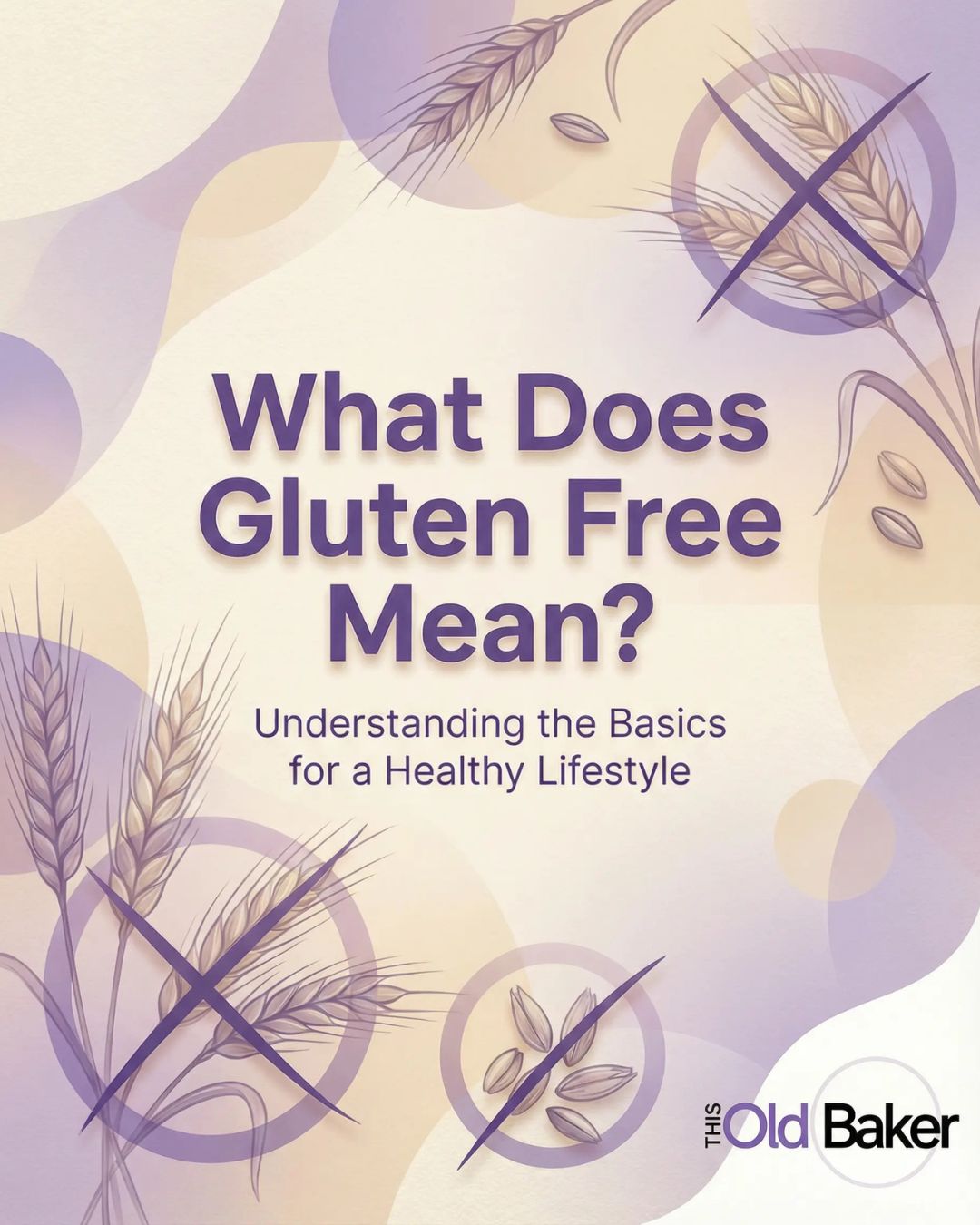
What Does Gluten Free Mean?
If you’ve ever stood in the grocery aisle staring at a package that proudly screams GLUTEN FREE and thought, “Alright… but what does that actually mean?” — you’re not alone. Somewhere between pantry baking, holiday casseroles, and Sunday morning muffins, the words “gluten free” became both a medical necessity for some and a mystery for many.
Let’s clear the flour dust out of the air and talk about it plainly.
What Is Gluten?
Gluten is a natural protein found in certain grains — mainly wheat, barley, and rye. It’s what gives bread its stretch, chew, and structure. When you knead dough and it becomes smooth and elastic? That’s gluten forming little protein strands that trap air and give baked goods their lift.
Think of gluten as the scaffolding in traditional baking. It’s the reason a loaf of sandwich bread slices neatly instead of crumbling into toast crumbs.
You’ll find gluten in:
- All-purpose flour
- Bread flour
- Whole wheat flour
- Semolina
- Spelt
- Barley
- Rye
If it’s made from those grains, gluten is almost certainly present.
So What Does “Gluten Free” Actually Mean?
When a product is labeled gluten free, it means it does not contain gluten — or contains such a tiny amount that it meets regulated safety standards (typically less than 20 parts per million in the United States).
In practical kitchen terms? It means the product is made without wheat, barley, rye, or their derivatives.
Instead of traditional flour, gluten-free products rely on alternative flours and starches like:
- Rice flour
- Almond flour
- Coconut flour
- Oat flour (certified gluten free)
- Sorghum flour
- Tapioca starch
- Potato starch
- Cornstarch
These substitutes mimic structure and texture in different ways, since they don’t naturally form that stretchy protein network.
Why Do Some People Need to Eat Gluten Free?
For some people, gluten isn’t just a preference — it’s a health issue.
Celiac Disease
Celiac disease is an autoimmune disorder. When someone with celiac disease consumes gluten, their immune system attacks the lining of their small intestine. Over time, this damages nutrient absorption and can lead to serious health problems.
For these individuals, gluten free isn’t optional. It’s medically necessary.
Non-Celiac Gluten Sensitivity
Some people don’t have celiac disease but still experience digestive discomfort, bloating, fatigue, or headaches when eating gluten. This is called non-celiac gluten sensitivity.
While not autoimmune, it can still significantly impact daily comfort.
Wheat Allergy
A wheat allergy is different from gluten intolerance. It’s an allergic reaction to proteins in wheat (not necessarily gluten alone). Someone with a wheat allergy may still tolerate barley or rye unless gluten itself is the trigger.
Is Gluten Free Automatically Healthier?
Here’s where things get interesting.
Gluten free does not automatically mean healthier.
A gluten-free cookie is still a cookie. A gluten-free brownie still contains sugar and fat. Removing gluten doesn’t magically transform processed food into a health tonic.
In fact, some gluten-free packaged foods contain:
- More sugar
- More fat
- More starch
- Fewer nutrients
Why? Because manufacturers have to compensate for texture and structure without gluten.
Whole foods — vegetables, fruits, meats, eggs, rice, beans — are naturally gluten free. Those are the real nutritional powerhouses, not specialty snack cakes with a gluten-free label.
How Does Gluten Affect Baking?
If you love scratch baking, gluten is something you work with whether you realize it or not.
Gluten develops when flour is mixed with liquid and agitated (stirred or kneaded). The more you mix, the stronger the gluten network becomes.
That’s why:
- Bread dough gets kneaded for structure
- Muffins are mixed gently to stay tender
- Overmixing pancake batter makes them tough
In gluten-free baking, there’s no natural gluten to build structure. That’s why gluten-free recipes often use:
- Xanthan gum
- Guar gum
- Psyllium husk
- Extra eggs
These ingredients act as binders to replicate elasticity and prevent crumbling.
What About Oats?
Oats are naturally gluten free. However, they’re frequently processed in facilities that also handle wheat, leading to cross-contamination.
If someone has celiac disease, they need oats labeled “certified gluten free” to ensure safety.
This is an important distinction many people miss.
Understanding Cross-Contamination
Even small traces of gluten can be harmful to individuals with celiac disease.
Cross-contamination can happen through:
- Shared toasters
- Cutting boards
- Flour dust in the air
- Shared baking tools
- Bulk bins
In a mixed kitchen, this matters. For a casual gluten-free eater, crumbs might not be a concern. For someone with celiac disease, it absolutely is.
Can You Substitute Gluten Free Flour 1:1?
Sometimes — but not always.
Many modern gluten-free flour blends are designed as “cup-for-cup” or “1:1” substitutes for all-purpose flour. These blends typically contain a mix of rice flour, starches, and binding agents.
However, results vary depending on the recipe.
Gluten-free flours behave differently in:
- Yeast breads
- Pie crusts
- Cakes
- Quick breads
Bread is especially challenging because gluten is what traps gas bubbles from yeast. Without it, the structure must be engineered differently.
If you’re converting a traditional recipe, you may need to experiment with hydration levels, mixing times, and added binders.
Is Gluten Free a Trend?
Yes and no.
There was certainly a surge in popularity over the past decade as more people explored elimination diets and digestive health. But for individuals with medical conditions, it’s not a passing fad.
It’s important to separate dietary necessity from marketing language.
The gluten-free industry has grown significantly, but that doesn’t mean everyone benefits from removing gluten. If you tolerate gluten well and have no symptoms, there’s no clear evidence that eliminating it improves health.
What Foods Are Naturally Gluten Free?
The simplest approach to gluten-free eating is focusing on foods that never contained gluten to begin with:
- Fresh fruits and vegetables
- Eggs
- Meat and poultry
- Fish
- Rice
- Corn
- Beans
- Lentils
- Nuts
- Dairy
Notice something? None of those require specialty labeling.
Sometimes the most straightforward path is the most nourishing one.
Should You Go Gluten Free?
That depends entirely on your body and medical guidance.
If you suspect gluten sensitivity, talk to a healthcare professional before eliminating it — especially before testing for celiac disease. Removing gluten before testing can interfere with accurate diagnosis.
If you feel fine eating traditional baked goods, there’s no universal reason to avoid them.
Food is personal. Bodies are different. Labels don’t tell the whole story.
The Bottom Line
Gluten free simply means a food does not contain gluten — the protein found in wheat, barley, and rye. For some, it’s essential for health. For others, it’s just another label in a crowded grocery aisle.
Understanding what gluten does in baking, how it affects certain bodies, and how substitutes function gives you power in your kitchen — whether you’re baking sandwich bread from scratch or experimenting with alternative flours.
In the end, gluten free isn’t a magic badge. It’s a specific dietary term with real meaning, especially for those who rely on it for their wellbeing.
And as with most things in the kitchen, clarity beats confusion every time.

Leave a Reply