

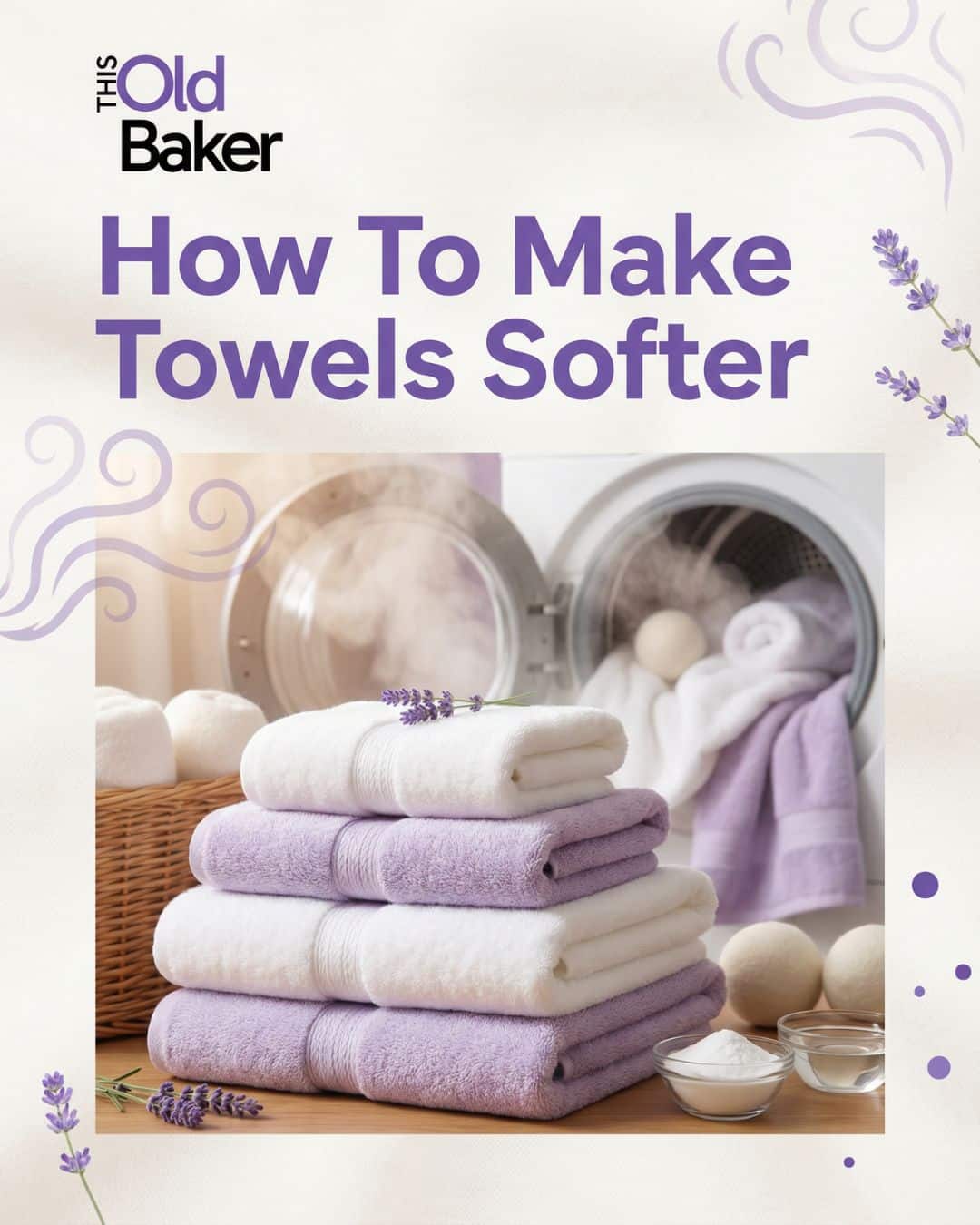
There’s nothing quite like wrapping up in a soft, fluffy towel — until that towel feels more like a sandpaper handshake. Over time, even the best towels can turn scratchy, stiff, and sad. But here’s the good news: you don’t need expensive fabric softeners or chemical-laden rinse aids to bring them back to life.
Your secret weapon? A little old-fashioned pantry magic.
Why Towels Get Stiff in the First Place
Before we fix the problem, let’s peek at what’s causing it.
- Detergent Build-Up — Too much soap leaves residue that clings to fibers, blocking them from fluffing up.
- Hard Water — Minerals like calcium and magnesium leave a coating that makes towels crunchy.
- Fabric Softeners — The irony! Most commercial softeners actually coat towels in waxy film, reducing absorbency and making them feel slick instead of soft.
- Over-Drying — Tossing towels into a hot dryer for too long can cook the fibers, making them brittle.
Once you understand the “why,” you can start treating the “how” — the old-fashioned, chemical-free way.
1. Wash With Less Detergent (and More Intention)
If you’re using the full cap of detergent the bottle suggests, you’re overdoing it. Modern washing machines use less water, so that soap doesn’t rinse out completely.
Try this: use half your normal detergent, and every few washes, run a load using just hot water and no soap to strip the residue away.
For an extra-deep clean, add ½ cup baking soda to the drum before washing. It helps neutralize odors, softens the water a touch, and breaks down leftover detergent.
2. Vinegar: The Pantry Softener
Vinegar may not smell glamorous, but it’s the unsung hero of soft laundry. A simple splash can dissolve hard-water minerals and strip away soap film better than most commercial products.
💧 How to Use: Add ½ cup white vinegar to your washer’s fabric softener dispenser (or directly into the rinse cycle).
Don’t worry — the vinegar smell won’t linger once the towels dry. It’s nature’s reset button for scratchy fabric.
Bonus: Vinegar also kills bacteria and helps whites stay brighter without bleach.
3. Skip the Fabric Softener (Really)
It’s tempting to pour that sweet-smelling blue liquid in every load, but softeners work by coating fabric fibers — exactly what you don’t want for towels.
That coating reduces absorbency and traps residue, making your towels stiff faster. If you crave a scent, use a few drops of essential oil on a wool dryer ball instead of liquid softener.
4. Give Towels a “Detox Soak”
Every few months, your towels need a deep soak to remove build-up. It’s like a spa day for your linens.
Fill your bathtub or a large bucket with hot water and add:
- ¼ cup washing soda (or baking soda if that’s what you’ve got)
- ¼ cup borax substitute or vinegar
Stir until dissolved, then toss in your towels. Let them soak for a few hours, stirring occasionally, then rinse thoroughly and wash as normal.
You’ll be amazed — the water might turn murky from all the residue leaving those fibers.
5. Air Dry… Then Fluff
Old trick, new twist: air drying keeps towels from wearing out, but it can make them stiff if left that way.
Try this combo approach:
- Hang your towels outside or on a rack until about 80% dry.
- Then, toss them in the dryer on a low-heat, short cycle for 10 minutes with a couple of dryer balls.
The sun disinfects and freshens; the dryer brings back the fluff. Best of both worlds.
6. Add Dryer Balls (or Homemade Alternatives)
Dryer balls help break up stiffness and keep air flowing around the towels as they dry. You can buy wool ones, or make your own from aluminum foil or tightly rolled, clean socks tied in string.
They reduce static, speed up drying time, and save you money — no softeners, no dryer sheets, just physics doing its job.
7. Check Your Water Quality
If your water’s on the harder side (hello, Florida!), those minerals might be the main culprit. A small in-line filter or washing soda boost in each load helps counteract mineral buildup naturally.
A quick fix: add 1 tablespoon of washing soda with your detergent for every towel load. It softens the water, helping your detergent rinse cleanly.
8. Rotate Towels and Avoid Overcrowding
Stuffing too many towels in the washer means they can’t rinse or tumble properly — the water can’t do its job.
Stick to half loads for towels, and try rotating your sets. Giving them rest days actually helps preserve softness and absorbency.
9. Choose Natural Fibers
If you’re in the market for new towels, opt for 100% cotton or bamboo blends. Avoid microfiber — it’s durable but tends to feel “sticky” on skin and can lose softness fast without chemical treatment.
Look for “zero-twist” or “ring-spun” cotton — both are known for staying fluffy longer.
10. Embrace the Homemade Touch
You don’t need to raid the cleaning aisle — your pantry has everything you need.
Here’s a quick pantry-softener blend you can keep by the washer:
- 2 cups baking soda
- 1 cup Epsom salt
- OPTIONAL: 10 drops essential oil (lavender, lemon, or eucalyptus)
Use 2 tablespoons per load during the wash. It softens naturally and adds a whisper of fragrance without synthetic residue.
A Quick Recap of Your Natural Softening Arsenal
| Problem | Old Habit | Swap With |
|---|---|---|
| Stiff towels | Fabric softener | Vinegar rinse |
| Hard water | More detergent | Baking soda or washing soda |
| Lack of fluff | Overdrying | Dryer balls + partial air dry |
| Musty smell | Bleach | Vinegar + sun drying |
The This Old Baker Philosophy: Simple, Smart, Sustainable
Your laundry room doesn’t need a shelf full of mystery chemicals to get results. What it really needs is a dose of common sense and a pinch of pantry science.
Soft towels aren’t about products — they’re about process. By stripping away buildup, respecting your fibers, and using gentle, natural ingredients, you’ll have soft, absorbent towels that last longer and smell fresher.
And maybe best of all? You’ll save money, reduce waste, and feel good knowing your home routines match your from-scratch values.
So next laundry day, skip the blue goo and grab the baking soda. Your towels (and your wallet) will thank you.


Leave a Reply