

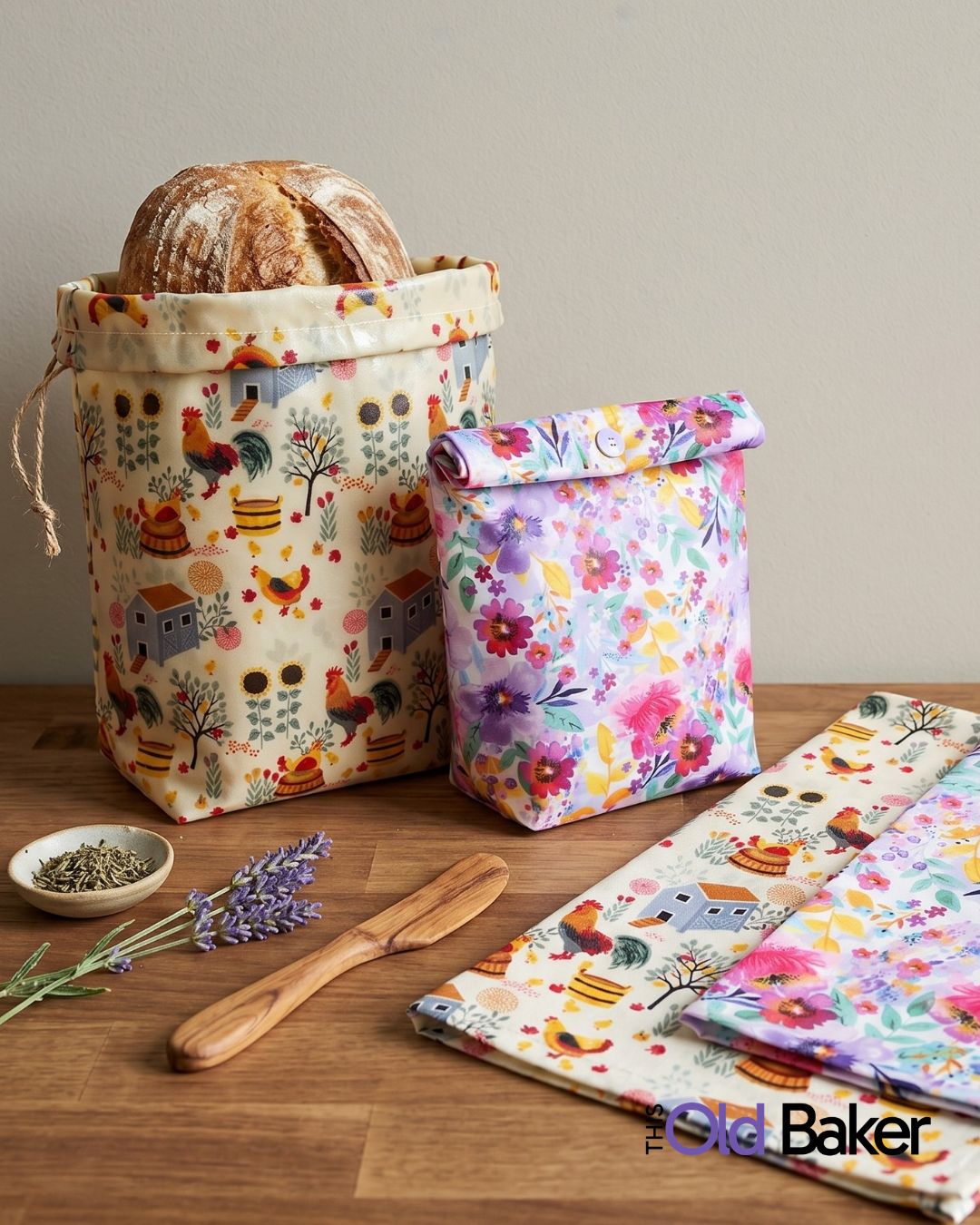
Beeswax Cloths for Food Storage are one of those kitchen ideas that feel new when you first see them… but they’ve actually been around for a long time.
Lately, they’ve started showing up again. You’ll see them wrapped around bread, covering bowls, or folded over cut produce. And for a lot of people, it raises the same question—why are these coming back now?
The answer is simple. People are rethinking how they use their kitchens.
A Return to Simpler Kitchen Habits
For a long time, food storage has been built around convenience. Plastic wrap, zip bags, and disposable products made it easy to cover, seal, and store just about anything without much thought.
And they still have their place.
But over time, people have started to look at those habits a little differently. Not in an extreme way, but in a practical one. There’s more awareness around waste, more interest in reusable options, and more attention being paid to what actually works best for different types of food.
That’s where beeswax cloths come in.
They offer a simple alternative for certain situations without requiring a complete change in how you run your kitchen.
What Makes Beeswax Cloths Different
The biggest difference between beeswax cloth and plastic wrap is how it handles air and moisture.
Plastic creates a tight seal. That can be helpful, but it can also trap moisture in a way that doesn’t always benefit the food you’re storing.
Beeswax cloth works differently. It forms a soft, flexible barrier that still allows a small amount of airflow. That balance helps keep food from drying out while also preventing that damp, trapped feeling that can lead to sogginess.
It’s a small shift, but it makes a noticeable difference with certain foods.
Bread, for example, often does better when it isn’t sealed tightly. The same goes for some types of produce and cheese. Instead of being locked in, they’re protected in a way that better matches how they naturally hold up.
Why It’s Trending Again
Beeswax cloths aren’t new, but they are more visible now than they’ve been in years.
Part of that is simply because people are sharing more. What used to be passed down quietly is now being filmed, posted, and talked about. Once something becomes visible, it starts to feel like a trend—even if it’s been around for generations.
But visibility isn’t the only reason.
There’s also been a shift toward using what you already have and making small, practical changes instead of large, complicated ones. Beeswax cloth fits into that mindset easily. It doesn’t require special tools, and it doesn’t force you to change everything at once.
You can try it in one area and see how it works.
That kind of flexibility is a big part of why it’s catching on again.
Not a Replacement for Everything
It’s important to keep expectations realistic.
Beeswax cloths are useful, but they’re not meant to replace every storage method in your kitchen. There are still plenty of situations where plastic containers, foil, or other tools make more sense.
This isn’t about switching everything over or following a strict rule.
It’s about having another option available when it fits.
That’s how most traditional methods work. They aren’t designed to do everything. They’re designed to solve specific problems well.
When you use them that way, they tend to be more effective and easier to maintain.
Where They Fit in Everyday Use
In a typical kitchen, beeswax cloths tend to show up in simple, repeatable ways.
Covering a bowl that’s going into the fridge. Wrapping a loaf of bread. Folding over a cut piece of fruit. Keeping cheese from drying out.
These are small tasks, but they happen often. And when you have a reusable option for them, it starts to add up over time.
You don’t have to think about it much once it becomes part of your routine. It’s just another tool within reach.
The Appeal of Reusability
One of the main reasons people are drawn to beeswax cloths is that they can be used again and again.
Instead of throwing something away after a single use, you’re using the same piece multiple times. That doesn’t just reduce waste—it also simplifies what you need to keep on hand.
You’re not constantly restocking or running out.
It’s a small shift, but it can make the kitchen feel more streamlined.
At the same time, it’s not about being perfect. Most people still use a mix of storage methods. The goal isn’t to eliminate everything else—it’s to use reusable options where they make sense.
A More Intentional Way to Store Food
Using beeswax cloths tends to slow things down just enough to make you more aware of what you’re doing.
You’re not just grabbing something and tossing it away. You’re choosing how to store your food, even in small ways.
That doesn’t make the process complicated. It just makes it a little more intentional.
And for a lot of people, that’s part of the appeal.
Familiar, But Different
One of the reasons beeswax cloths are easy to adopt is that they don’t feel unfamiliar.
They’re made from basic materials. They don’t rely on anything complicated or hard to understand. Once you see how they’re used, it makes sense right away.
At the same time, they offer a slightly different approach than what many people are used to. That combination—familiar but different—makes them easier to try without hesitation.
Why They Keep Coming Back
Trends come and go, but certain ideas tend to return.
Usually, those are the ones that solve a real problem in a simple way.
Beeswax cloths fall into that category.
They don’t promise to change everything. They don’t require a major shift. They just offer a practical option that works well in the right situations.
That’s why they’ve been around for so long.
And that’s why they keep coming back.
The Bottom Line
Beeswax cloths are a simple, reusable option for everyday food storage. They’re not new, and they’re not meant to replace everything in your kitchen.
They’re just another tool—one that works well for certain foods and simple tasks.
Be sure to check out our latest podcast episode: Beeswax Cloth Trends Again on all of your favorite platforms.
If you choose to use them, they tend to fit in naturally. No big changes, no complicated system.
Just a small adjustment that can make everyday kitchen routines a little more practical.

Beeswax Cloths for Food Storage
Materials
- 100% cotton fabric cut to size
- ¼ cup beeswax pellets to 1/2 cup adjust based on amount of fabric
- 1 tsp jojoba oil to 2 tsp optional
- 1 tbsp pine resin to 2 tbsp optional
- 🧰 Equipment
- Baking sheet
- Parchment paper
- Oven
- Scissors
- Paintbrush optional
Instructions
- Preheat oven to 250°F.
- Cut cotton fabric into desired sizes (small, medium, or large wraps).
- Line a baking sheet with parchment paper and place fabric pieces flat on top.
- Sprinkle beeswax evenly over each piece of fabric.Then lightly sprinkle pine resin over the fabric and drizzle or dot jojoba oil across the surface.👉 Keep everything in a light, even layer—too much will make the cloth stiff or greasy.
- Place in oven for 4–6 minutes, or until the beeswax is fully melted.
- Remove from oven and use a brush (if needed) to spread melted wax evenly across the fabric.
- Carefully lift each piece and wave it gently in the air for a few seconds until it cools and sets.
- Let cool completely before using or storing.
Notes
Wash with cool water and mild soap—avoid heat.
Not recommended for raw meat or very wet foods.
Reheat and add more wax over time to refresh.
🥡 Storage Store folded in a drawer or basket at room temperature. Beeswax Wrap Coverage Guide Batch Size: ¼ cup beeswax (light coat)
- Covers 2–3 medium wraps (10″x10″ to 12″x12″)
- OR 1 large wrap + 1 small wrap
- Covers 4–6 medium wraps
- OR 2–3 large wraps (12″x14″ to 14″x16″)
Standard Wrap Sizes Small (Snack + Jar Covers)
- 8″x8″
- Great for half an onion, avocado, or small bowls
- 10″x10″ or 12″x12″
- Ideal for sandwiches, cheese, and leftovers
- 12″x14″ or 14″x16″
- Perfect for covering mixing bowls, bread, or produce

Leave a Reply