

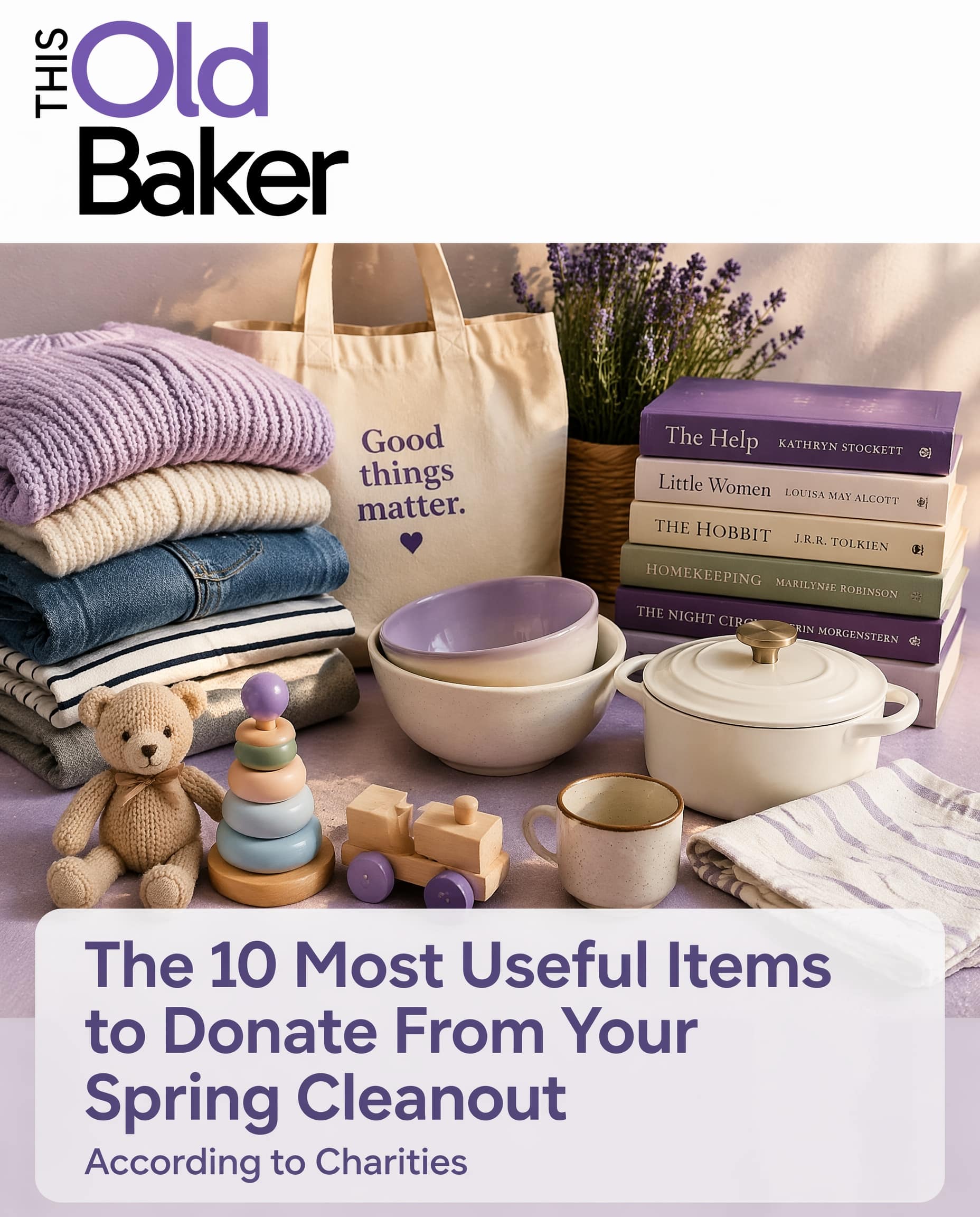
Spring cleaning has a way of turning every closet, cabinet, and corner of your home upside down. You start with one drawer and suddenly you’ve got piles everywhere—clothes you forgot about, kitchen extras, things you “might use someday.”
Instead of stuffing it all back where it came from, this is your chance to do something better with it.
Donating is one of the easiest ways to turn clutter into something meaningful—but here’s the part most people miss:
Not everything you donate is actually useful.
Charities don’t need our leftovers. They need items that are clean, functional, and ready to help someone right now.
If you’re going to load up your car, make it count.
Here are the 10 most useful things to donate from your spring cleanout—according to what charities say they actually need.
1. Gently Used Clothing (That’s Actually Wearable)
Clothing is one of the most commonly accepted donations—but also one of the most mis-donated.
Charities are looking for items that are:
- Clean
- Free of stains or tears
- Ready to wear immediately
Think everyday basics:
- Jeans, shirts, sweaters
- Kids’ clothing
- Workwear and interview outfits
If you wouldn’t hand it to a friend, don’t donate it.
2. Seasonal Clothing
Spring is a peak donation time, and organizations specifically look for weather-appropriate items.
That means:
- Lightweight jackets
- Activewear
- Spring and summer basics
Out-of-season items often sit unsold or unused, so timing matters more than people think.
3. Shoes (In Good Condition)
Shoes are always in demand—but only if they’re usable.
Donate pairs that:
- Still have life left in them
- Are clean and matched
- Have intact soles
From sneakers to work shoes, these can make a huge difference for someone starting a job or getting back on their feet.
4. Household Basics
This is one of the most helpful categories—and one people often overlook.
Charities regularly accept:
- Dishes and cookware
- Small appliances
- Storage containers
- Towels and linens
These are the items people need to set up a home from scratch.
5. Furniture (That’s Still Solid)
Furniture donations can have a major impact—especially for families transitioning out of shelters or into stable housing.
High-need items include:
- Dressers
- Tables and chairs
- Small shelving units
Just make sure it’s:
- Clean
- Not broken
- Missing no parts
If it’s falling apart, it becomes a burden—not a donation.
6. Kitchen Essentials
If you’ve got duplicates hiding in your cabinets, this is your moment.
Items like:
- Pots and pans
- Mixing bowls
- Utensils
are consistently in demand because they’re everyday necessities.
Thrift stores rely heavily on these items to help families furnish kitchens affordably .
7. Books, Games, and Toys
These are especially valuable for families and children—but condition matters.
Donate:
- Complete puzzles and board games
- Children’s books
- Gently used toys
Missing pieces or broken items often can’t be resold or reused.
8. Hygiene and Personal Care Items
This is one of the most needed—and least donated—categories.
Charities often request:
- Soap, shampoo, toothpaste
- Feminine hygiene products
- New socks and underwear
These items provide dignity and comfort, especially for those experiencing homelessness.
9. Small Electronics (That Work)
Working electronics can be incredibly useful, especially for job searches and education.
Think:
- Lamps
- Small kitchen appliances
- Basic electronics
But always test them first—non-working items create extra work and cost for organizations .
10. Non-Perishable Food
If your pantry cleanout is part of your spring reset, don’t forget food donations.
Items like:
- Canned goods
- Dry pasta and rice
- Shelf-stable snacks
are essential for food banks and shelters .
What NOT to Donate (Quick Reality Check)
This matters just as much as what to give.
Most charities cannot accept:
- Broken or heavily worn items
- Hazardous materials
- Large appliances
- Mattresses or certain baby items due to safety rules
Donation centers are not a dumping ground.
A good rule of thumb:
If it’s not usable, it’s not donatable.
How to Make Your Donation Actually Helpful
Before you drop anything off, take a few minutes to do this right:
- Wash and clean everything
- Fold or box items neatly
- Keep similar items together
- Check what your local charity actually needs
Thoughtful donations save time, reduce waste, and make sure your items are used—not thrown away.
The Bigger Picture
Spring cleaning isn’t just about getting your house in order.
It’s about creating space—for yourself and for someone else.
That extra set of dishes? Someone’s first kitchen.
That jacket you don’t wear? Someone’s only coat.
That box of pantry food? Someone’s next meal.
Donating with intention turns clutter into something meaningful.
And that’s what makes it worth doing.




Leave a Reply