

If you’ve ever followed a recipe exactly and still thought, “Well… that’s fine.” — this is probably why.
Not the salt.
Not the quality of your paprika.
Not the brand of cumin.
It’s that you didn’t bloom your spices.
Blooming is one of those old-school kitchen tricks that makes inexpensive pantry ingredients taste restaurant-level rich. And once you understand it, you’ll never just dump dried spices into liquid again.
Let’s break it down.
What Does “Blooming Spices” Actually Mean?
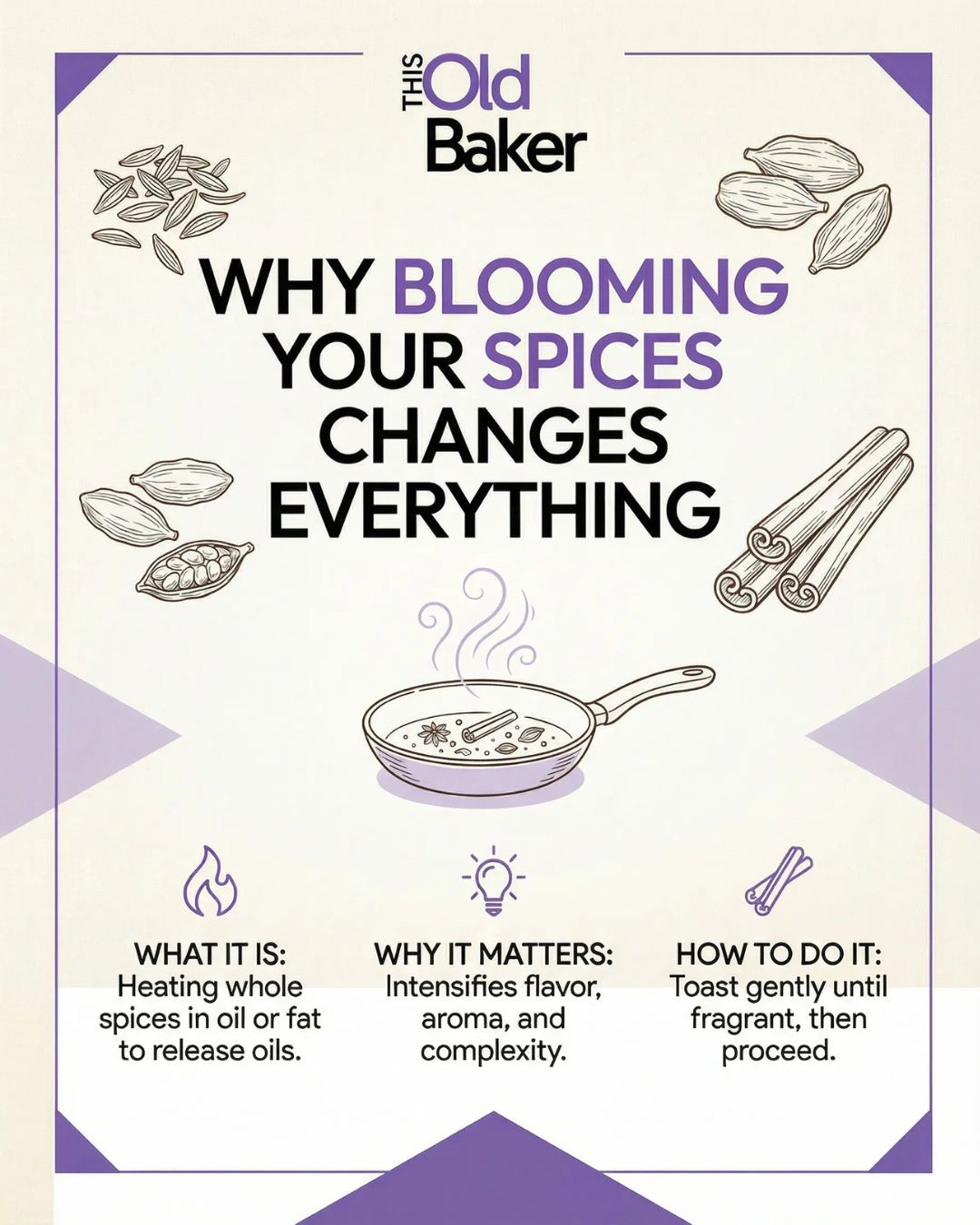
Blooming spices simply means heating dried spices briefly in fat (like oil or butter) before adding other ingredients.
That’s it.
You’re waking them up.
Dried herbs and spices contain natural oils that carry flavor. When they sit in a jar on your pantry shelf, those oils stay locked inside. Heat + fat releases them.
If you skip this step and toss spices straight into broth or tomatoes, you’re basically leaving flavor behind.
Why It Makes Such a Big Difference
There are three main reasons blooming changes everything:
1. It Intensifies Flavor
Heat draws out essential oils from spices like cumin, paprika, chili powder, coriander, curry powder, and even dried thyme.
The result?
Deeper aroma.
Richer taste.
More complexity.
That “something’s missing” feeling disappears.
2. It Eliminates Raw or Dusty Taste
Ever taste chili and think it has a slightly chalky or harsh spice note?
That’s undercooked spice powder.
When spices aren’t heated properly, they can taste flat or bitter. Blooming smooths them out and makes the flavor round instead of sharp.
3. It Helps Spices Distribute Evenly
Fat carries flavor. When you bloom spices in oil or butter, the fat spreads that flavor throughout the entire dish.
That’s why curries, gravies, taco meat, and stews taste fuller when done this way.
Which Spices Should You Bloom?
Not all spices need blooming, but most ground spices benefit from it.
Best candidates:
- Paprika
- Chili powder
- Cumin
- Curry powder
- Garam masala
- Coriander
- Turmeric
- Mustard powder
- Red pepper flakes
Whole spices (like cumin seeds or mustard seeds) bloom beautifully too — sometimes even better.
Dried leafy herbs (like parsley or basil) don’t need as much blooming, but a quick toast won’t hurt.
How to Bloom Spices (The Right Way)
Here’s the simple method:
- Heat 1–2 tablespoons of oil or butter in a pan over medium heat.
- Add your spices directly to the hot fat.
- Stir constantly for 20–60 seconds.
- As soon as they become fragrant, move on with your recipe.
That’s it.
You’re not frying them for five minutes. You’re just coaxing out flavor.
If they start to smell burnt or turn very dark, you’ve gone too far. Burned spices taste bitter fast.
When to Bloom Spices in a Recipe
The best time to bloom spices is right after sautéing onions or aromatics and before adding liquid.
Example: Taco Meat
Brown your meat.
Drain excess fat if needed.
Add a tablespoon of oil if the pan is dry.
Stir in your seasoning mix.
Let it toast for 30 seconds.
Then add broth or tomato sauce.
Instant upgrade.
Example: Homemade Gravy
Melt butter.
Whisk in flour.
Add your spices directly to that butter-flour base.
Let them heat briefly.
Then whisk in broth.
The difference is dramatic.
What Happens If You Add Spices Straight to Liquid?
They hydrate.
But they don’t bloom.
Water doesn’t release oils the way fat does. So your dish may taste seasoned… but not developed.
It’s the difference between “good” and “What did you do to this?!”
Blooming Spices in Pantry Cooking
This is where it really shines for a from-scratch kitchen.
If you use dry mixes like:
- Taco seasoning
- Fajita mix
- Brown gravy mix
- Enchilada seasoning
- Curry blends
- Dry skillet bases
Blooming them gives that homemade depth people assume takes hours.
Even butter powder-based mixes benefit from blooming in a little real oil before adding liquid.
That’s how you stretch simple pantry ingredients into something that tastes slow-cooked.
Blooming vs. Toasting — Is There a Difference?
Yes.
Toasting usually refers to heating spices dry in a pan without fat.
Blooming uses fat.
Both wake up flavor — but blooming distributes that flavor better through the dish because fat carries it.
If you’re making a dry rub, toasting works fine.
If you’re building a sauce or soup? Blooming wins.
Common Blooming Mistakes
Let’s save dinner before it goes sideways.
🔥 Using High Heat
Spices burn quickly. Medium heat is plenty.
⏱ Walking Away
This is a 30-second job. Stay put.
🧂 Adding Too Late
If you toss spices in after all the liquid is added, you missed your blooming window.
🧈 Not Enough Fat
If the pan is dry, spices scorch. Add a splash of oil.
Does Blooming Work for Baking?
Sometimes.
Warming cinnamon, nutmeg, or pumpkin spice briefly in melted butter before adding to batter can deepen flavor in coffee cake or muffins.
You’re not frying them — just gently warming in fat to release aroma.
It’s subtle, but noticeable.
What About Slow Cooker Meals?
Bloom spices in a skillet before adding them to the slow cooker.
Dump-and-go works… but bloom-and-go tastes better.
Even 60 seconds in a pan transforms chili or soup.
The Budget-Friendly Flavor Upgrade
Here’s why this matters in a real-life kitchen.
Blooming:
- Makes inexpensive cuts of meat taste richer.
- Makes pantry meals taste intentional.
- Reduces the need for extra salt.
- Cuts down on “something’s missing” frustration.
It’s one of the easiest ways to cook smarter, not fancier.
And it costs nothing.
The Takeaway
If your meals feel flat, don’t reach for more salt.
Reach for heat and a tablespoon of fat.
Bloom your spices.
It’s the quiet little trick that turns everyday pantry cooking into something that tastes like you worked a lot harder than you did.
And once you start doing it?
You won’t skip it again.



Leave a Reply