

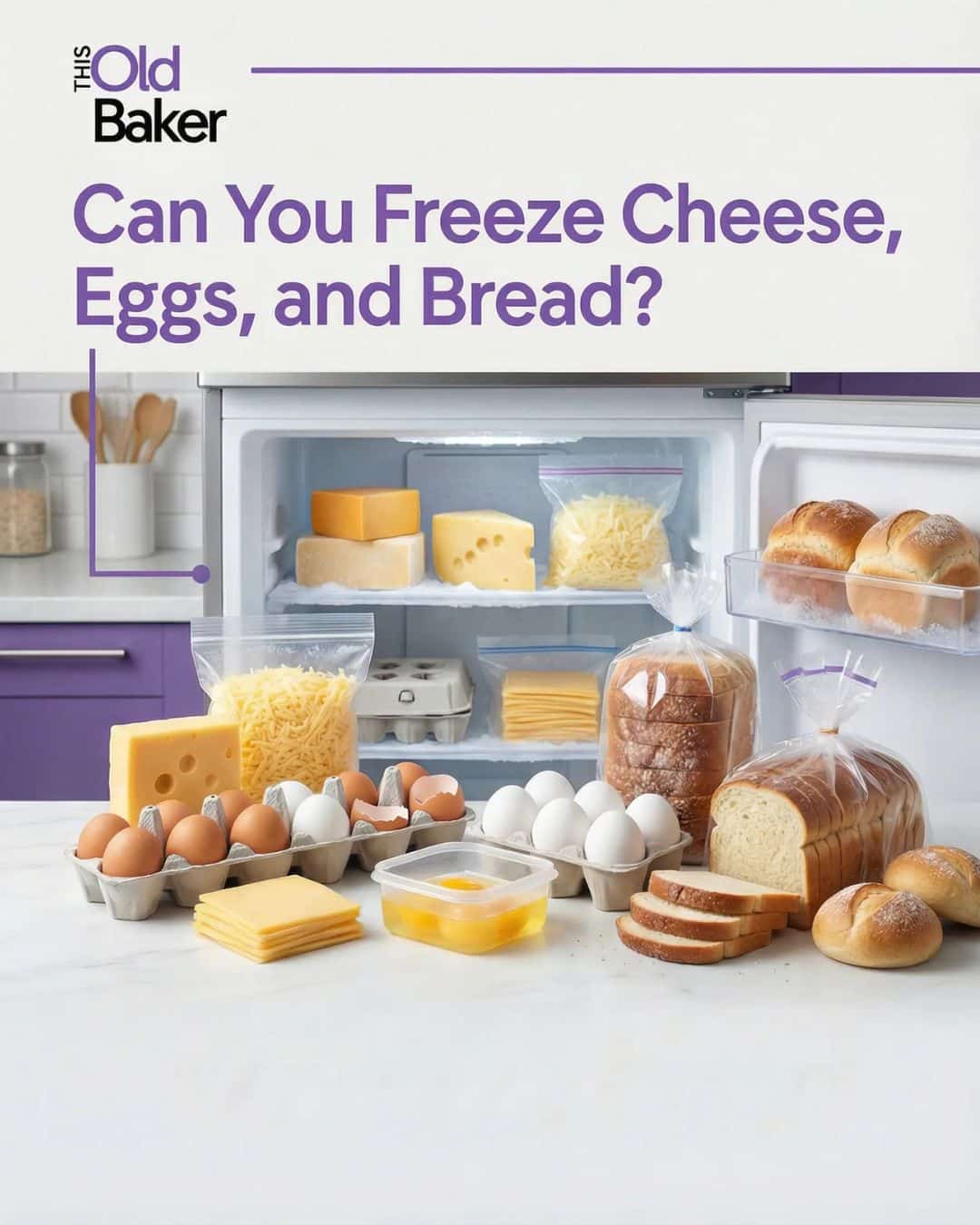
If there’s one thing I love more than a good grocery sale, it’s knowing I can stash the extra and not let a single crumb go to waste. Can you freeze cheese, eggs, and bread? Absolutely—you just need to know which kinds, how to wrap them, and what to expect when they thaw. Pull up a chair, friend; This Old Baker’s got you covered with simple tips and a little kitchen sass.
First, Freezer Basics (the rules Grandma lived by)
- Keep it cold: Your freezer should sit at 0°F / −18°C. That pauses quality loss; it doesn’t stop time.
- Wrap it right: Air is the enemy. Use freezer bags, heavy foil, plastic wrap, or vacuum seal. Squeeze out as much air as you can.
- Label & date: Future-you will not remember what that mystery brick is. Masking tape + marker = happiness.
- Portion smart: Freeze in the portions you’ll actually use, so you don’t thaw more than you need.
Cheese: Freeze It (with expectations)
Best candidates:
- Hard & semi-hard cheeses (cheddar, Colby, Monterey Jack, Swiss, provolone, mozzarella): Freeze shredded for best results. Blocks can turn crumbly; shredding first helps texture.
- Parmesan & aged cheeses: Grate, portion, and freeze. Perfect for tossing into sauces and soups straight from frozen.
Freeze-if-you’ll-cook-with-it:
- Cream cheese, ricotta, cottage cheese, goat cheese: Texture gets grainy or watery after thawing. They’re fine for cooking or baking (think cheesecake batter, lasagna, casseroles), but not for a pretty schmear on a bagel.
Skip or expect changes:
- Soft ripened cheeses (Brie, Camembert): Freezing can make them mealy. Save those for the cheese board fresh if you can.
How to freeze cheese (quick):
- Shred or grate; toss with a tiny pinch of cornstarch to prevent clumping (optional).
- Spread flat in a thin layer inside a freezer bag; press out air.
- Label & freeze up to 2–3 months for best quality (it’s safe longer, but flavor/texture fade).
Thawing & using:
- Thaw in the fridge (overnight).
- Use shredded cheese straight from frozen in hot dishes—melts beautifully.
- Expect thawed block cheese to be a bit crumbly; great for cooking, not so great for slicing.
This Old Baker tip: Save Parmesan rinds in a bag in the freezer. Drop one into soups or sauce for rich, salty magic.
Eggs: You Can Freeze Them—Just Don’t Freeze the Shell
Do not freeze raw eggs in the shell—they crack and can get weird in texture. But you can freeze eggs if you crack and prep them first.
Best options:
- Whole eggs (out of shell): Lightly beat to combine whites and yolks. Portion into silicone muffin cups or ice cube trays; pop out and bag.
- Egg whites: Freeze as-is. They whip up fine later for meringues or macarons.
- Egg yolks: Yolks can gel when frozen. To prevent that, beat in a pinch of salt or a little sugar before freezing (choose salt for savory dishes, sugar for baking). The exact amount isn’t fussy—think a small pinch per 2–4 yolks.
Cooked eggs:
- Scrambled eggs & breakfast burritos freeze nicely.
- Hard-boiled eggs: The whites turn rubbery—not pleasant. You can freeze crumbled yolks for later deviled eggs or salad, but keep the whites fresh.
Storage & timing:
- For best quality, use frozen eggs within 3–4 months.
- Always thaw in the fridge overnight.
- Once thawed, use promptly; don’t refreeze raw eggs.
- Cook thoroughly (no runny drama).
This Old Baker tip: Freeze measured portions—3 tbsp = 1 whole egg. Label cubes (“1 egg,” “2 whites,” “4 yolks—sweet”) so baking day is painless.
Bread: The Freezer’s Best Friend
If you only memorize one section today, make it this one—bread freezes like a champ. Freezing keeps it tasting “just baked” far longer than leaving it on the counter.
Best candidates:
- Sandwich loaves, artisan loaves, rolls, buns, bagels, tortillas, naan, pita.
- Sliced bread is ideal—thaws fast and you can grab just what you need.
How to freeze bread (no fuss):
- Slice first (unless it’s pre-sliced).
- Wrap tightly in plastic or foil, then slide into a freezer bag. For long loaves, wrap twice.
- Remove air, label, and freeze. Bread is happiest used within 2–3 months for peak flavor.
Thawing & refreshing:
- Whole loaves: Thaw still wrapped at room temp (the wrap traps moisture so you don’t get a dry crust). Once thawed, crisp in a 350°F / 175°C oven for 5–10 minutes if you like.
- Slices: Go straight from freezer to toaster—perfect texture every time.
- Rolls/Bagels: Thaw at room temp or cut in half before freezing so you can toast from frozen.
This Old Baker tip: Stash the heels and stale bits in a “crumbs” bag. When it’s full, blitz into breadcrumbs, toss for croutons, or pulse for meatballs. Nothing wasted.
Quick Cheat Sheet (Pin This!)
Freeze it (great results):
- Shredded cheddar, mozzarella, provolone, Swiss
- Grated Parmesan/pecorino (and rinds for soup)
- Beaten whole eggs (out of shell), egg whites
- Sliced bread, bagels, tortillas, rolls, buns
Freeze it with caveats (best for cooking):
- Cream cheese, ricotta, cottage cheese, goat cheese (texture changes)
- Egg yolks (treat with a pinch of salt or sugar first)
- Un-sliced artisan loaves (slice before freezing if possible)
Skip or accept big changes:
- Soft-ripened cheeses for cheese boards (Brie/Camembert)
- Hard-boiled egg whites (rubbery after thawing)
Troubleshooting & Make-It-Better Tricks
- Freezer burn? That’s just dehydrated edges from air exposure. Trim it off and carry on. Prevent it by double-wrapping and pressing out air.
- Crumbly thawed cheese? Use it in things—grilled cheese, omelets, casseroles, mac and cheese—where melt matters more than sliceability.
- Eggs look watery after thawing? Whisk well. They’re fine to scramble or bake.
- Bread tastes “freezer-y”? Next time, wrap tighter and use within 8–12 weeks. To revive, warm slices in a 300–350°F oven for a few minutes—works wonders.
A Few Real-Life Combos I Love
- Breakfast burrito kit: Freeze scrambled eggs (cooled), cooked sausage, and tortillas separately. Assemble from frozen—toast the tortilla, warm fillings, add cheese (from your frozen stash).
- Lasagna night: Freeze ricotta specifically for baking—texture change won’t matter once it’s tucked into layers of sauce and noodles.
- Soup saver: Keep a Parmesan-rind bag in the freezer. Drop one into simmering soup or marinara for depth that tastes like you worked all day.
Bottom Line (and a wink)
Freezing is just kitchen time travel. It lets you buy smart, stretch a sale, and keep the good stuff ready for busy days. Cheese, eggs, and bread can all live happily in the freezer—just match the right method to the right food, label it like a pro, and give it a little love on the way back to the table.



Leave a Reply