

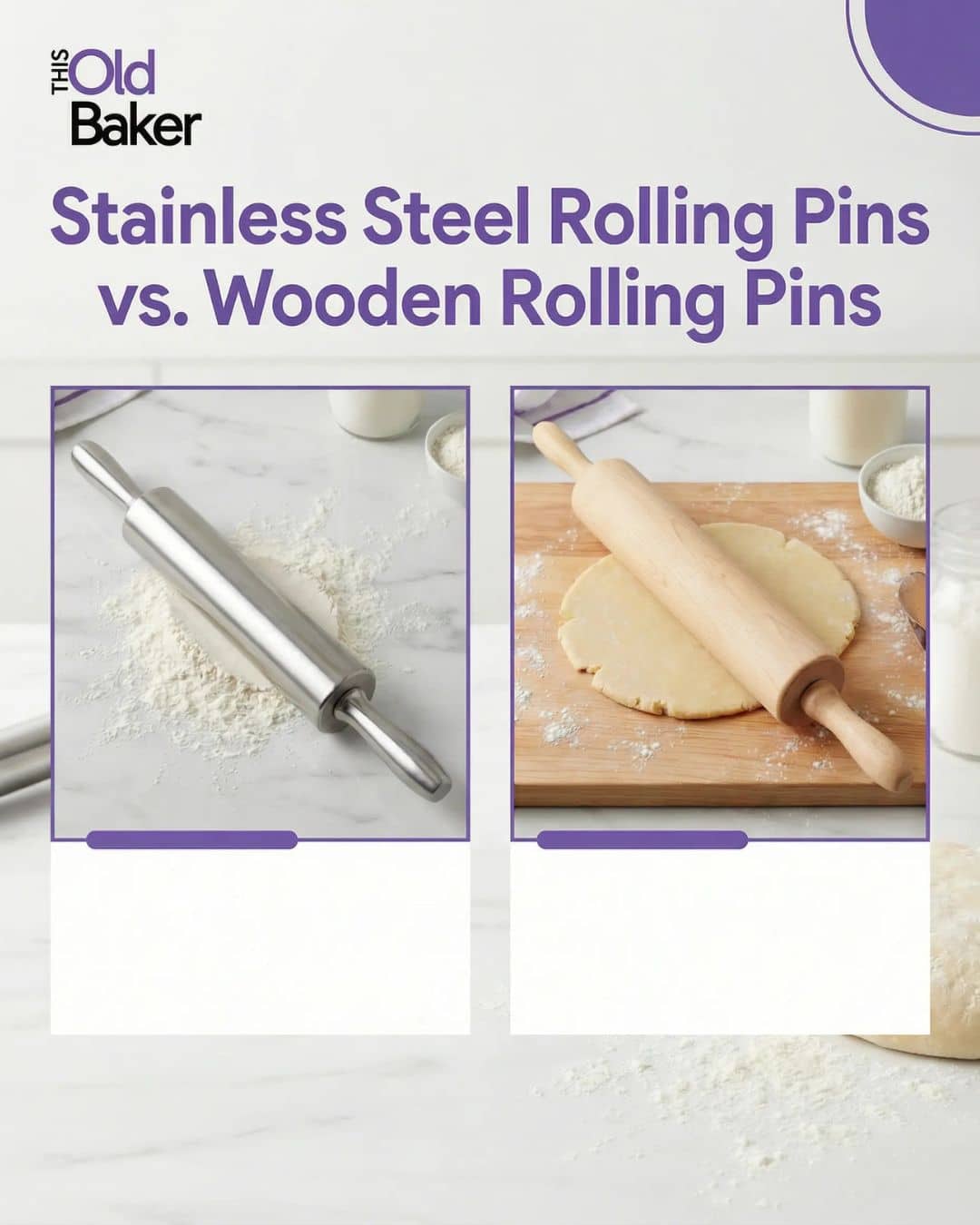
When it comes to rolling out pie crusts, sugar cookies, or that glorious cinnamon roll dough, your rolling pins aren’t just a tool—it’s an extension of your hands. And like any good kitchen debate (butter vs. shortening, sugar vs. honey, crunchy vs. chewy cookies), there’s a loyal fan base on both sides of the rolling pin aisle. Some swear by the old-fashioned wooden rolling pin, while others have embraced the sleek, modern stainless steel version.
So which one should you keep in your kitchen? The truth is, both have their place. Let’s roll through the pros, cons, and little quirks of each so you can decide which pin will be your partner-in-dough.
The Classic: Wooden Rolling Pins
Ah, the wooden rolling pin. Just looking at one can make you think of Grandma dusting her counter with flour, the smell of warm bread filling the kitchen. There’s a reason wooden pins have stood the test of time—they’re practical, familiar, and they get the job done.
Advantages of Wooden Rolling Pins
- Warm, Natural Feel
Wooden rolling pins have a comforting, tactile quality. The wood’s slight grain gives you control over your dough, making it easier to “feel” when it’s just the right thickness. - Variety of Styles
From the American-style pin with handles to the sleek French dowel pin, wood comes in shapes and sizes for every baking style. You can choose one that matches your preferred rolling technique. - Gentle on Dough
Wood tends to be less likely to overheat dough (especially butter-rich pastry dough) because it doesn’t conduct heat as quickly. This can help prevent butter from melting before you get your crust in the oven. - Aesthetic Charm
Let’s be honest—wooden pins just look good. Whether displayed in a utensil crock or hung on the wall, they add a touch of warmth and old-world charm to your kitchen décor. - Affordable and Accessible
You can find a good wooden rolling pin almost anywhere, from thrift stores to high-end kitchen shops.
The Modern Marvel: Stainless Steel Rolling Pins
Stainless steel rolling pins are like the sleek sports cars of the baking world—smooth, fast, and efficient. They’ve been gaining popularity among professional chefs and serious home bakers for their precision and ease of use.
Advantages of Stainless Steel Rolling Pins
- Non-Porous & Hygienic
Unlike wood, stainless steel doesn’t absorb odors, colors, or flavors. That means you can roll out garlicky pasta dough one day and sugar cookie dough the next without worrying about flavor crossover. - Chill for Better Results
Stainless steel can be chilled in the refrigerator or freezer before use. A cold pin helps keep butter from melting in pastry dough, giving you that flaky, bakery-style crust. - Easy to Clean
Stainless steel rolling pins are dishwasher-safe, so cleanup is quick and easy. No worrying about damaging the surface with too much water. - Smooth, Even Rolling
The slick surface of stainless steel means less sticking—especially when working with sticky doughs like gingerbread or fondant. A quick dusting of flour is often all you need. - Durability
These pins are nearly indestructible. They won’t warp, crack, or absorb moisture like wood can over time.
Side-by-Side Comparison
| Feature | Wooden Rolling Pin | Stainless Steel Rolling Pin |
|---|---|---|
| Texture | Warm, slightly textured grip | Smooth, sleek surface |
| Temperature Control | Stays room temperature | Can be chilled for cold dough |
| Cleaning | Hand-wash only, avoid soaking | Dishwasher-safe |
| Durability | Can warp or crack over time | Highly durable, rust-resistant |
| Appearance | Rustic, traditional charm | Modern, professional look |
| Price Range | Affordable to moderate | Moderate to high |
Which One Should You Choose?
The answer depends on your baking style, preferences, and even your kitchen’s personality.
Choose a Wooden Rolling Pin If…
- You value the traditional feel and control wood provides.
- You mostly make cookies, bread, or doughs that aren’t overly sticky.
- You enjoy the nostalgic charm of a wooden tool in your hands.
- You want an affordable and widely available option.
Choose a Stainless Steel Rolling Pin If…
- You bake buttery pastries, pie crusts, or laminated doughs and need a cold rolling surface.
- You prefer tools that are easy to clean and maintain.
- You like a slick surface that minimizes sticking.
- You want something virtually indestructible for years of use.
Why You Might Want Both
For serious bakers—or those who aspire to be—it’s not crazy to keep both types in your kitchen. Each excels at different tasks. A wooden pin is perfect for rustic bread and everyday baking, while a stainless steel pin shines when you need precision and temperature control.
Think of it like having both a chef’s knife and a serrated knife—you could get by with one, but having both just makes life easier (and tastier).
A Note on Technique
No matter which rolling pin you choose, the technique matters more than the tool. Light, even pressure, rotating the dough frequently, and working on a well-floured surface will take you farther than any fancy gadget.
That said, the right rolling pin for your style can make the process more enjoyable—and maybe even inspire you to bake more often.
Final Thoughts from This Old Baker
Personally? I have a soft spot for wooden rolling pins. Mine has a few nicks and flour permanently lodged in the grain from years of pie-making, and I wouldn’t trade it for anything. But I’ll admit—my stainless steel rolling pin is the one I reach for when I’m making a delicate puff pastry or fondant for a special-occasion cake.
In the end, baking is about joy, memories, and flavor. Whether you’re rolling with old-fashioned charm or modern precision, the best rolling pin is the one that helps you put something delicious on the table.
Which team are you on—wood or steel? Share your favorite rolling pin memories (and maybe a picture of your most recent bake) in the comments.

Leave a Reply