

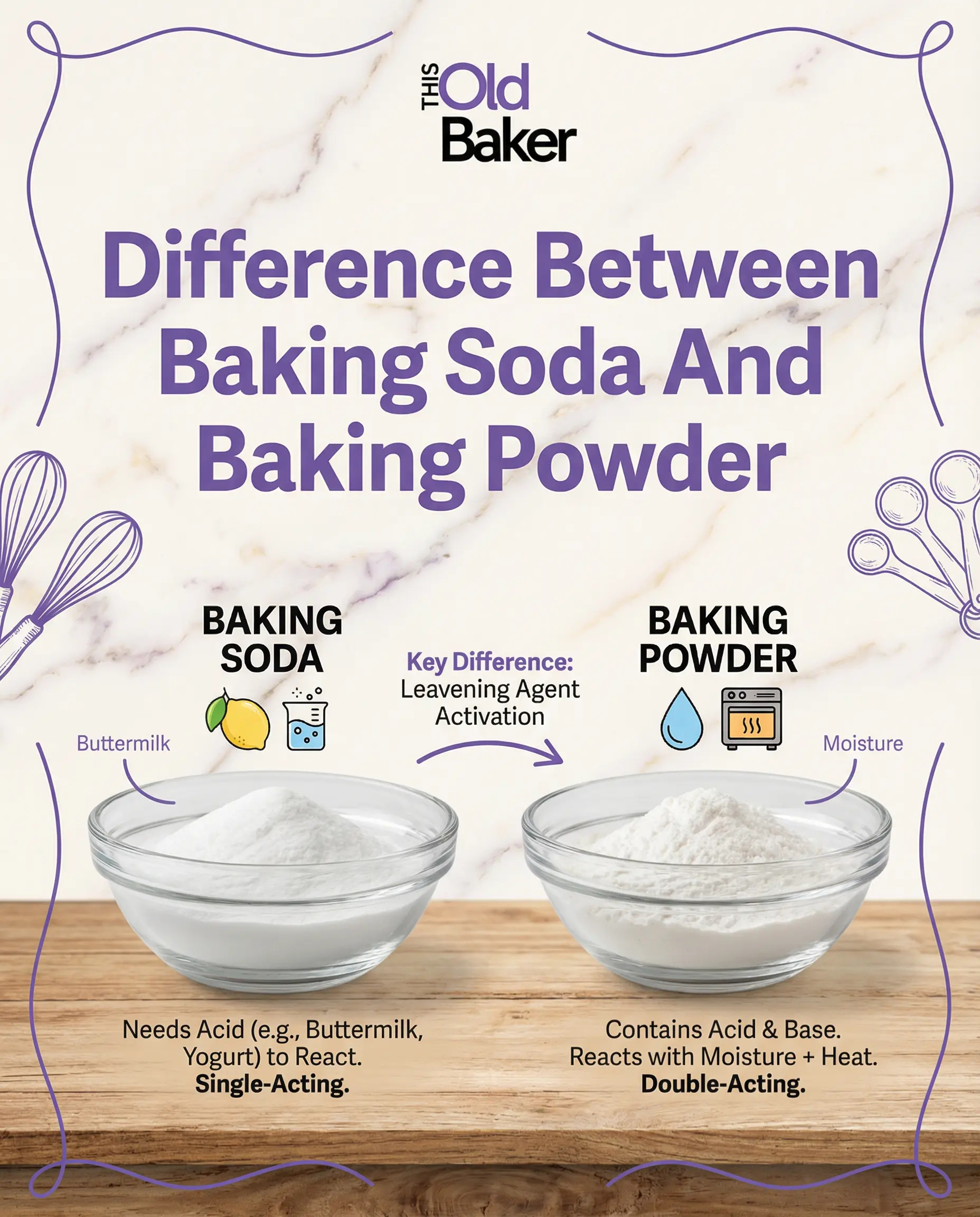
The difference between baking soda and baking powder is crucial for any baker to understand. Baking is as much a science as it is an art. The perfect cake, cookie, or bread requires the right balance of ingredients, precise measurements, and an understanding of chemical reactions. Two of the most commonly used leavening agents in baking are baking soda and baking powder. While they might seem interchangeable, they are quite different in composition and function. Understanding these differences is crucial for achieving the desired texture and taste in baked goods.
What Is Baking Soda?
Baking soda, also known as sodium bicarbonate, is a single compound with the chemical formula NaHCO₃. It is a base that requires an acid to activate. When combined with an acidic ingredient—such as vinegar, lemon juice, buttermilk, or yogurt—baking soda reacts to produce carbon dioxide gas. This gas forms bubbles in the batter or dough, causing it to rise.
Because baking soda is pure sodium bicarbonate, it is much stronger than baking powder. A small amount can produce significant leavening. However, if too much is used, it can leave an unpleasant metallic or soapy taste. Since baking soda begins reacting immediately when mixed with an acid, it is best used in recipes that are baked right away.
What Is Baking Powder?
Baking powder is a mixture that contains baking soda along with an acid—typically cream of tartar—and a drying agent like cornstarch. The presence of an acid in baking powder means that it can create carbon dioxide gas without needing an additional acidic ingredient in the recipe.
There are two types of baking powder:
- Single-acting baking powder – Reacts immediately when combined with liquid.
- Double-acting baking powder – Reacts twice: first when mixed with liquid and again when exposed to heat in the oven. Most commercial baking powders are double-acting, making them more reliable and giving baked goods a better rise.
Key Differences Between Baking Soda and Baking Powder
| Feature | Baking Soda | Baking Powder |
|---|---|---|
| Chemical Composition | Sodium bicarbonate (NaHCO₃) | Sodium bicarbonate, acid (cream of tartar), cornstarch |
| Acid Required? | Yes, needs an acid to activate | No, contains its own acid |
| Leavening Strength | Stronger | Weaker, but more controlled |
| Taste Impact | Can taste bitter if too much is used | Has a neutral taste due to added acid |
| Reaction Time | Immediate when mixed with an acid | Double-acting powders react twice (with liquid and heat) |
| Common Uses | Recipes with acidic ingredients (buttermilk, vinegar, yogurt) | Recipes without acidic ingredients |
When to Use Baking Soda vs. Baking Powder
- Use baking soda when the recipe includes acidic ingredients like brown sugar, molasses, lemon juice, yogurt, or buttermilk. It helps neutralize the acidity and contributes to browning in baked goods.
- Use baking powder when the recipe lacks a strong acid, such as in classic vanilla cakes or biscuits, where a steady, predictable rise is needed.
- Use both in some recipes that require extra leavening. For example, chocolate cake often contains both baking soda and baking powder because cocoa powder is slightly acidic but may not be enough to fully activate the baking soda alone.
Substituting One for the Other
If you find yourself without one or the other, substitutions are possible, but they require careful adjustments:
- Substituting baking soda for baking powder: Use 1/4 teaspoon of baking soda for every 1 teaspoon of baking powder, and add an acid like lemon juice or vinegar.
- Substituting baking powder for baking soda: Use 3 teaspoons of baking powder for every 1 teaspoon of baking soda, but this may affect the taste and texture of the final product.
Storage and Shelf Life
Both baking soda and baking powder should be stored in a cool, dry place. Baking soda has an indefinite shelf life if kept dry, while baking powder loses potency over time and should be replaced every 6 to 12 months.
To test baking soda’s effectiveness, mix it with vinegar—it should bubble immediately. To test baking powder, mix it with warm water. If it fizzes actively, it is still good.
Final Thoughts
Understanding the differences between baking soda and baking powder can help bakers make better choices when following or modifying recipes. Each plays a unique role in baking, affecting texture, rise, and taste. Whether making fluffy pancakes, tender muffins, or crisp cookies, using the correct leavening agent ensures the best results. Mastering these ingredients allows for more confidence and creativity in the kitchen!

Leave a Reply