There’s something deeply satisfying about the process of scratch baking, especially when it comes to making homemade Italian bread. The warm, inviting aroma that fills your kitchen as the bread bakes, the anticipation of slicing into the golden crust, and the joy of sharing it with family and friends — these are moments that elevate the simple act of baking into an experience worth savoring.
Italian bread has a rich history rooted in tradition, passed down through generations as a symbol of community and togetherness. From rustic village ovens in Italy to modern home kitchens, this bread has remained a staple thanks to its versatility and comforting nature. Whether it’s served alongside hearty pasta dishes, used as the base for a panini, or simply enjoyed with a drizzle of olive oil, Italian bread is a timeless classic that never fails to impress.
The Art of Scratch Baking
Scratch baking is more than just making food from raw ingredients; it’s an act of creativity and mindfulness. When you bake homemade Italian bread, you’re engaging in a time-honored practice that connects you to bakers of the past. Kneading the dough, for instance, is a tactile experience that requires focus and care. It’s not just about mixing ingredients but developing the dough’s structure and texture. This process ensures your bread has the perfect balance of softness and chewiness that Italian bread is known for.
Kneading is often seen as the heart of bread-making. It transforms a sticky, unformed mass of dough into something elastic and smooth, ready to rise and take shape. As you knead, you’re strengthening the gluten strands, which are essential for creating the bread’s airy texture. There’s a rhythm to kneading that’s almost meditative, and it’s one of the reasons many bakers find the process so rewarding.
Why Homemade Italian Bread?
In a world where store-bought options are abundant, you might wonder why so many people turn to making Italian bread at home. The answer lies in the unparalleled quality and satisfaction that come with scratch baking. Homemade Italian bread offers a depth of flavor and freshness that’s hard to match. Plus, it allows you to customize your loaf to suit your preferences, whether you like it with a soft, pillowy interior or a crusty, golden exterior.
Making Italian bread at home also gives you control over the ingredients. Many commercial breads contain preservatives and additives to extend shelf life, but when you bake from scratch, you know exactly what goes into your bread. It’s a healthier, more wholesome option that fits perfectly into any home-cooked meal.
The Role of Tradition
Italian bread is more than just a food; it’s a cultural cornerstone. In Italy, bread is often made fresh daily and served with nearly every meal. It’s used to mop up rich sauces, paired with cheeses and cured meats, or simply enjoyed on its own. The tradition of baking bread at home brings with it a sense of nostalgia and connection to family recipes and memories.
For many, baking Italian bread is a way to honor these traditions. It’s a reminder of the importance of slowing down, appreciating the process, and creating something with care. Even if you’re not Italian, making this bread at home can give you a taste of the culture and an appreciation for its culinary heritage.
The Joy of Sharing
One of the most beautiful aspects of homemade Italian bread is its ability to bring people together. There’s something universal about breaking bread with loved ones, and when that bread is made by hand, it feels even more special. Sharing a loaf of freshly baked Italian bread is an act of love and generosity, whether you’re hosting a dinner party or gifting a loaf to a neighbor.
Scratch baking also provides an opportunity to involve others in the process. Kneading dough can be a fun activity for kids, and shaping the loaves is a creative step that everyone can enjoy. The communal nature of bread-making makes it a perfect project for families and friends.
Tips for Success
While making homemade Italian bread can be straightforward, there are a few tips to keep in mind to ensure the best results. First, patience is key. Allowing the dough to rise properly is crucial for achieving the right texture and flavor. This step shouldn’t be rushed; let the yeast do its work and trust the process.
Second, pay attention to the kneading. If you’re new to scratch baking, it might take some practice to recognize when the dough is ready. A well-kneaded dough will feel elastic and slightly tacky but won’t stick to your hands excessively.
Finally, don’t be afraid to experiment. Italian bread is versatile, and you can try adding your own twist by incorporating herbs, seeds, or even a touch of cheese. While the traditional loaf is always a winner, personalizing your bread can make it even more enjoyable.
A Timeless Skill
In today’s fast-paced world, the art of scratch baking can feel like a luxury, but it’s one worth indulging in. Making homemade Italian bread is a way to slow down and reconnect with simple pleasures. It’s a chance to step away from the hustle and bustle and focus on creating something beautiful and delicious with your own hands.
As you knead the dough, watch it rise, and pull the finished loaf from the oven, you’ll find that the time and effort are more than worth it. Homemade Italian bread isn’t just food; it’s an experience, a tradition, and a gift that keeps on giving.
So, whether you’re an experienced baker or just starting your scratch baking journey, give homemade Italian bread a try. You’ll discover the joys of kneading, the magic of rising dough, and the unparalleled satisfaction of pulling a golden, crusty loaf from your own oven. It’s a skill that will serve you well and a tradition you’ll treasure for years to come.
Homemade Italian Bread
Ingredients
- 1 1/2 tablespoons active dry yeast 2 packets
- 1/2 cup warm water
- 1/2 teaspoon granulated sugar
- 2 cups hot water hot to the touch not boiling
- 3 tablespoons granulated sugar
- 1 tablespoon salt
- 1/2 cup vegetable oil
- 5-6 cups all-purpose flour add more if needed to get to a pliable dough
- 1 large egg white for brushing on loaves
Instructions
- Dissolve yeast, 1/2 cup warm water, and 1/2 teaspoon granulated sugar in a small bowl.
- In a large bowl or stand mixer, combine 2 cups hot water, 3 tablespoons granulated sugar, the salt, and the oil. Add 3 cups of flour to the mixture in this large bowl/mixer and mix well. Stir in yeast mixture.
- Add 2 – 3 cups more flour and mix until well blended. (At this point your dough will still be quite sticky). Leave in bowl, cover with a towel and let rise for 1 hour. (If using a mixer, remove the bowl from the mixer and cover. Otherwise your paddle attachment or dough hook will get covered in dough when it rises). NO KNEADING IS REQUIRED.
- After the rise, if the dough is too sticky to handle, add more flour until its workable. For some people this can be up to a cup or more! Just don’t dry out the dough. Add by quarter cupfuls until its workable.
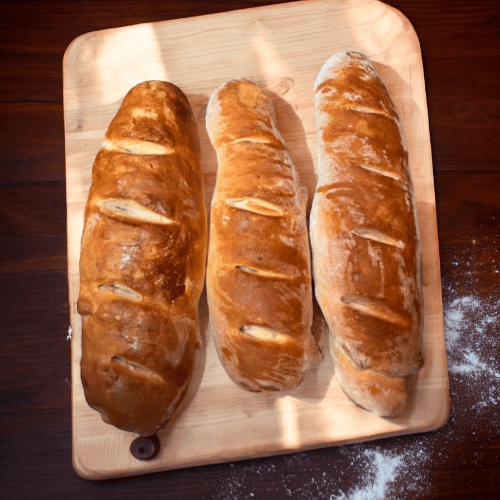
- Divide dough into 2 (or 3 if you want smaller loaves) pieces. Roll out each piece on a floured surface into the length desired then roll up lengthwise like a jelly roll. If it’s still too sticky, add more flour until it’s workable but not dry.
- Put on a greased cookie sheet, sealed side down, and tuck the ends under. Slash the top diagonally across the top every couple of inches with a sharp knife.
- Cover and let loaves rise 30 more minutes.
- While loaves are rising, preheat oven to 400 degrees Fahrenheit.
- Whisk the egg white and brush over the top of loaves.
- Bake for 25 – 30 minutes.