

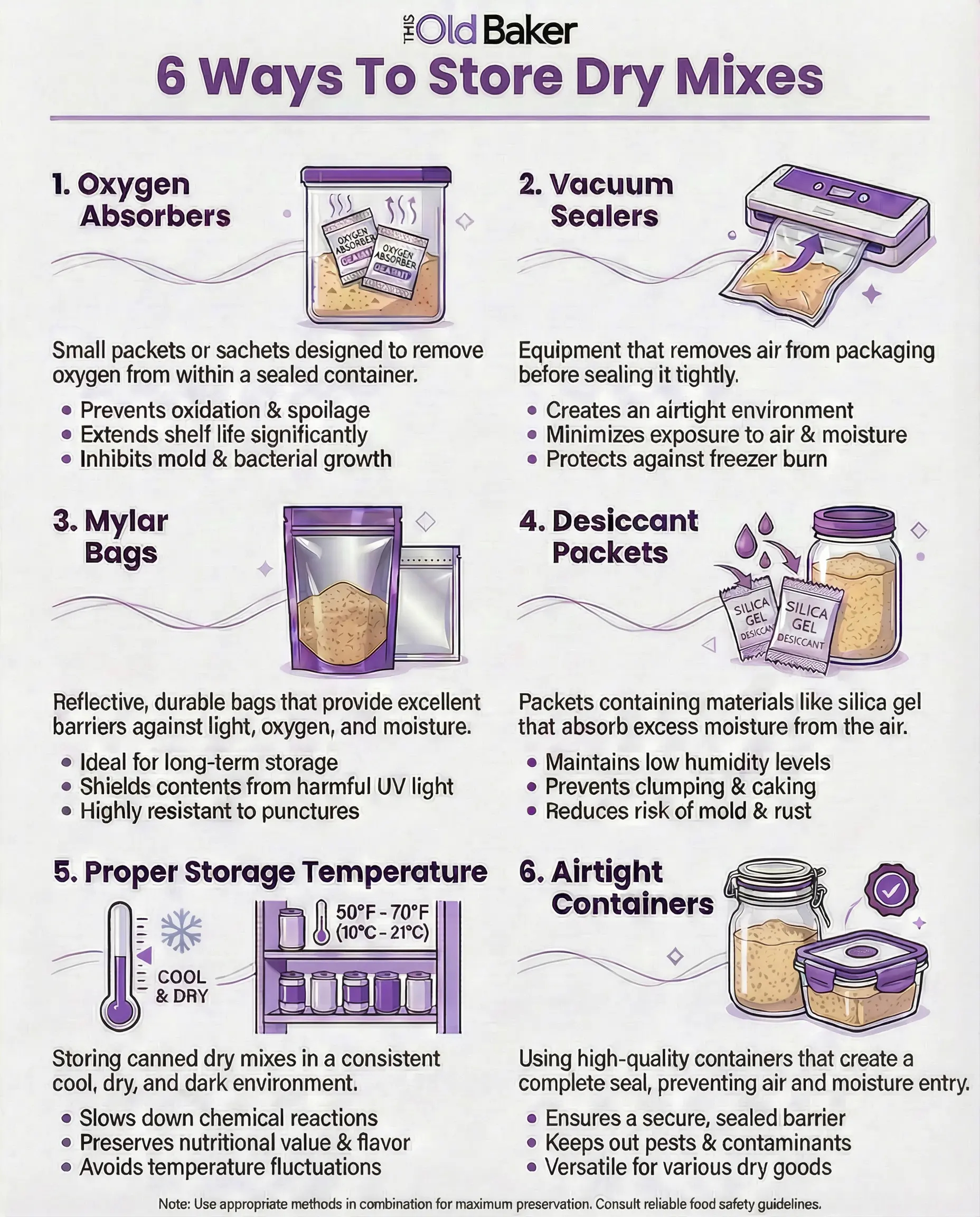
If you’re building a pantry full of homemade mixes, knowing the right ways to store dry mixes matters just as much as the recipe itself. Proper storage protects flavor, texture, and food safety — and can dramatically extend shelf life.
Whether you’re storing cookie mixes, soup bases, seasoning blends, or homemade baking mixes, controlling oxygen, moisture, light, and temperature is the key to long-term success.
Let’s break down the most effective methods.
1. Oxygen Absorbers: Removing What Causes Spoilage
Oxygen is one of the biggest enemies of dry food storage. Over time, exposure to air leads to oxidation, flavor degradation, and nutrient loss.
Oxygen absorbers are small packets designed to remove oxygen from within a sealed container. Once placed inside a jar or sealed bag, they begin absorbing the oxygen in that space, creating a low-oxygen environment.
Why this matters:
- Prevents oxidation
- Extends shelf life significantly
- Inhibits mold and bacterial growth
Oxygen absorbers are especially useful for flour-based mixes, rice blends, and long-term pantry storage. However, they must be used in properly sealed containers to work effectively.
They are not moisture absorbers — they remove oxygen, not humidity — so they’re often paired with other preservation tools.
2. Vacuum Sealers: Eliminating Air Before Storage
Vacuum sealing is one of the most effective ways to protect dry mixes from air exposure. A vacuum sealer removes air from packaging before sealing it tightly, creating an airtight environment.
This method:
- Minimizes exposure to oxygen and moisture
- Protects contents from environmental contamination
- Helps prevent freezer burn when freezing dry mixes
Vacuum sealing works beautifully for portioned mixes, freezer-ready kits, and bulk storage.
However, remember that vacuum sealing alone does not remove all oxygen at the microscopic level. For long-term storage, combining vacuum sealing with oxygen absorbers provides even better results.
3. Mylar Bags: Long-Term Protection from Light and Air
Mylar bags are reflective, durable storage bags that provide an excellent barrier against oxygen, light, and moisture.
They are ideal for:
- Long-term storage
- Bulk mix preservation
- Emergency pantry supplies
One major advantage of Mylar is its resistance to UV light. Light exposure can degrade nutrients and affect flavor over time. Mylar shields contents from light damage, helping mixes maintain quality.
For best results, Mylar bags are often used with oxygen absorbers and stored inside a secondary container like a food-grade bucket for additional protection.
If you are serious about extended pantry storage, Mylar is one of the most reliable methods available.
4. Desiccant Packets: Controlling Moisture
While oxygen causes oxidation, moisture causes clumping and spoilage.
Desiccant packets — often containing silica gel — absorb excess humidity from the surrounding air. These are particularly helpful in humid climates or environments where temperature changes cause condensation.
Benefits include:
- Maintaining low humidity levels
- Preventing clumping and caking
- Reducing risk of mold
Desiccants are especially useful in spice blends, powdered mixes, and sugar-heavy recipes that are prone to absorbing moisture.
Important distinction: desiccants control moisture, while oxygen absorbers control air. They serve different roles and can be used together when appropriate.
5. Proper Storage Temperature: Cool, Dry, and Consistent
Even the best packaging can fail if storage temperature fluctuates.
Dry mixes should be stored in a cool, dry, and dark environment. Ideal storage temperature typically falls between 50°F and 70°F (10°C to 21°C).
Why temperature matters:
- Slows down chemical reactions
- Preserves flavor and nutritional value
- Reduces condensation risk
- Avoids ingredient breakdown
Avoid storing dry mixes near:
- Ovens
- Dishwashers
- Refrigerators (exterior walls can create condensation)
- Sunlit countertops
Consistency is more important than extreme coolness. A stable pantry shelf in a controlled room temperature environment is often better than a garage with fluctuating heat.
6. Airtight Containers: The Foundation of Dry Storage
No preservation strategy works without a proper seal.
High-quality airtight containers create a barrier against air and moisture. Glass jars with tight lids, gasket-sealed containers, and food-grade plastic containers with locking seals are all effective options.
Airtight storage:
- Prevents air infiltration
- Keeps out pests
- Protects from environmental contamination
- Maintains freshness
For short- to medium-term storage, airtight containers alone may be sufficient.
For long-term storage, combine airtight containers with oxygen absorbers or desiccants depending on the mix.
Combining Methods for Maximum Preservation
The strongest preservation systems combine multiple methods.
For example:
- Mylar bag + oxygen absorber + airtight bucket
- Mason jar + oxygen absorber
- Vacuum seal + desiccant for humid climates
Each method addresses a different risk factor:
- Oxygen
- Moisture
- Light
- Temperature
- Contamination
Layering protection increases shelf life and consistency.
What Does Not Work for Dry Mix Preservation
Some common misconceptions include:
- Simply “canning” dry mixes without oxygen control
- Storing mixes in thin plastic bags
- Leaving containers partially sealed
- Ignoring humidity in warm climates
Dry mixes are shelf-stable because of low moisture content — but they are still vulnerable to environmental exposure.
How Long Can Dry Mixes Last?
Shelf life varies depending on ingredients and storage quality.
Generally:
- Basic flour-based mixes: 6–12 months
- Well-protected, oxygen-controlled storage: 1–2 years
- Mylar + oxygen absorber + cool storage: potentially longer
Always check for:
- Off smells
- Discoloration
- Clumping beyond normal texture
If a mix looks or smells unusual, discard it.
Final Thoughts
Learning the proper ways to store dry mixes protects your time, your ingredients, and your investment in scratch cooking.
Homemade mixes offer control, savings, and convenience — but only if they stay fresh.
By managing oxygen, moisture, light, and temperature, you turn a simple jar of dry ingredients into a reliable pantry asset.
Smart storage isn’t complicated — it’s intentional.
And once you set up the right system, your pantry works for you, not against you.
Download the entire PDF here.


Leave a Reply