

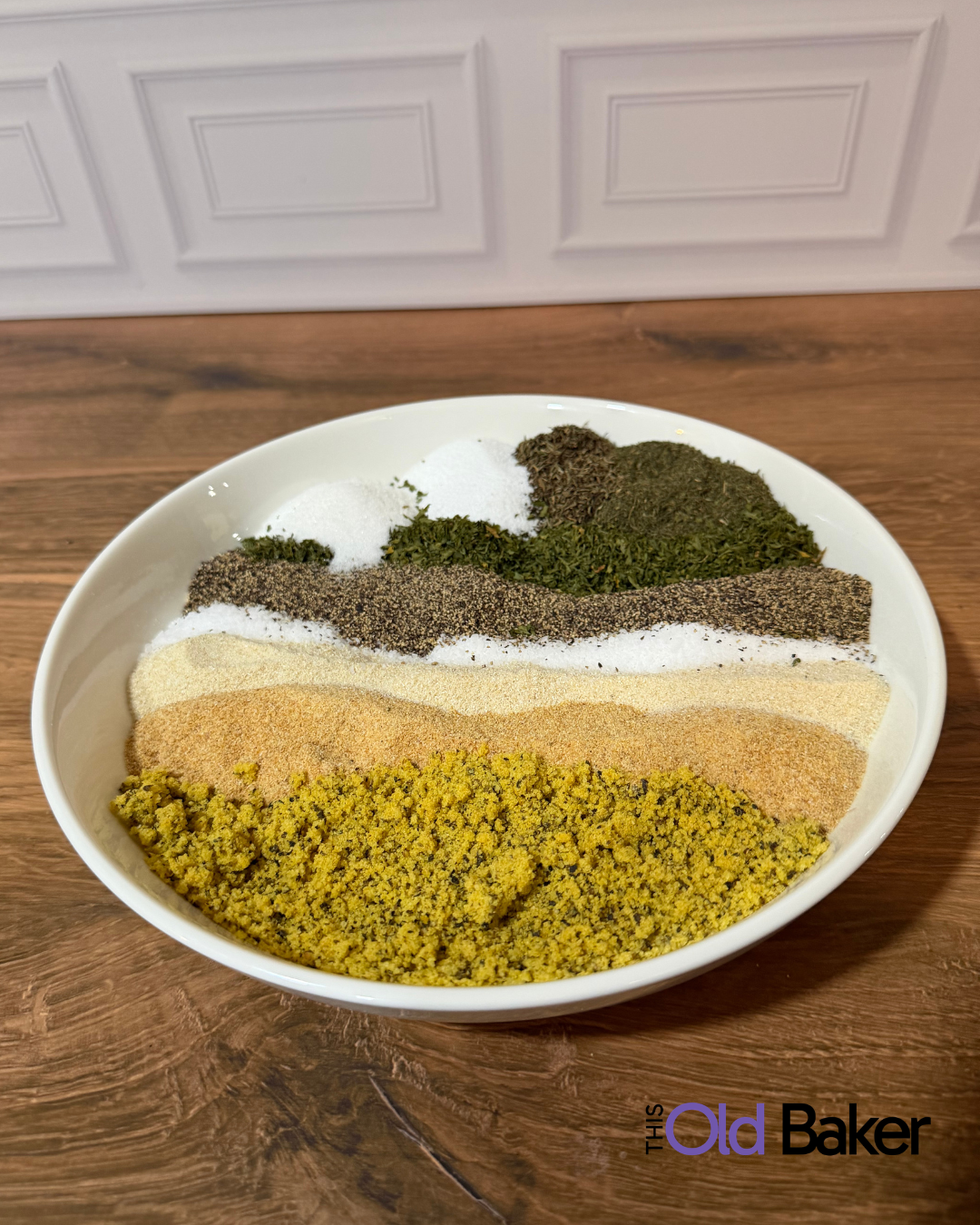
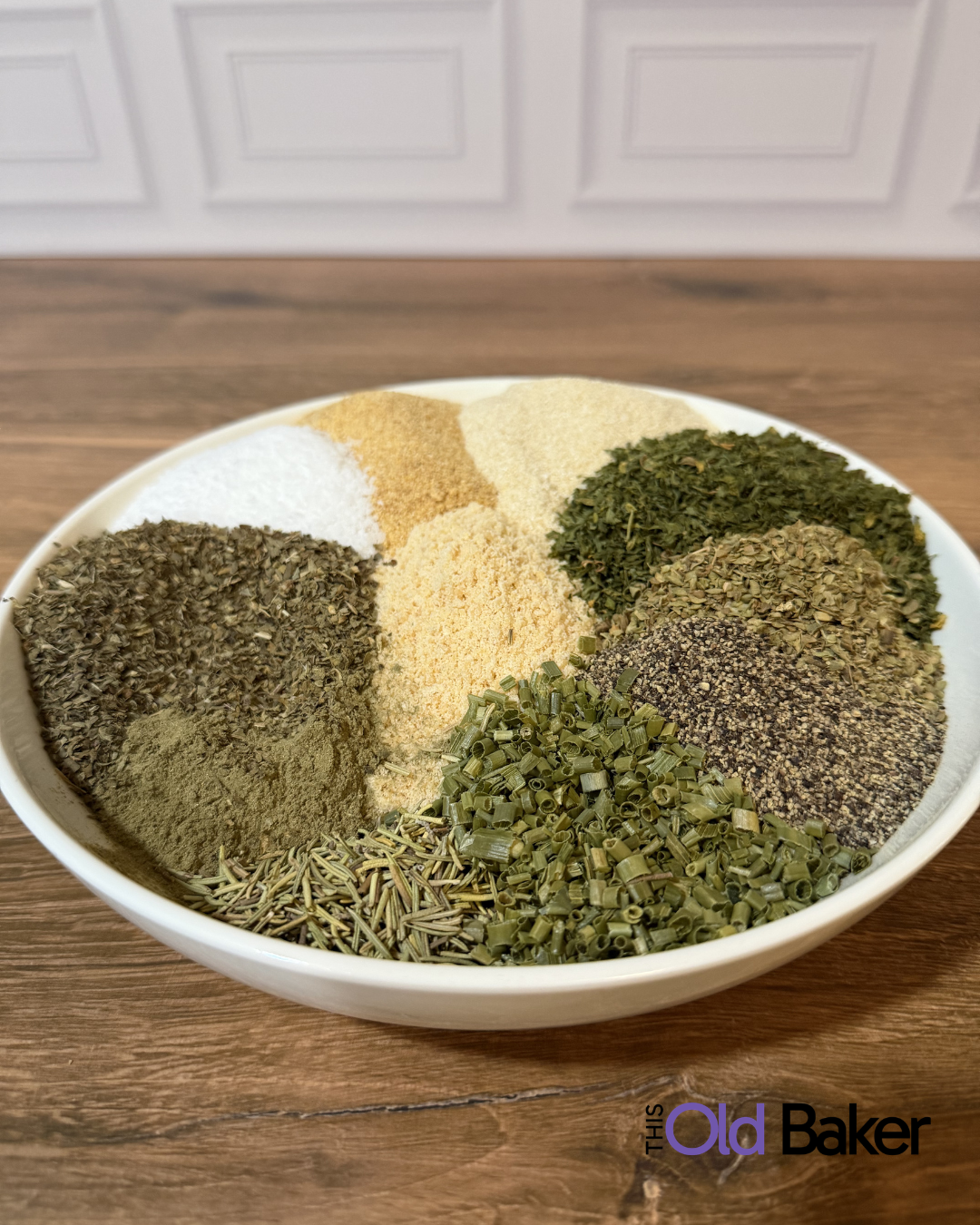
Ten ingredients in a quart jar that produce lemon pepper wings with crispy skin and bright citrus flavor in every bite — no sauce, no mess, no sticky coating situation. Lemon pepper seasoning as the base, layered with garlic powder, onion powder, dill, thyme, black pepper, salt, parsley, and two optional additions that take the citrus character from good to genuinely sharp: citric acid and a pinch of sugar to balance it. If you want the sweet and smoky direction instead, the Honey BBQ Dry Wing Seasoning — thisoldbaker.com/honey-bbq-wing-seasoning is the counterpart to this one.
Two to three tablespoons tossed with two pounds of wings in a tablespoon of oil. The butter finish after cooking is the step that makes these unmistakably lemon pepper — warm melted butter carrying an extra teaspoon of seasoning tossed over the just-cooked wings before serving. It’s optional, it takes 30 seconds, and it’s the difference between good and the version people ask about.
Building on Top of Lemon Pepper Seasoning
The base is one and a third cups of pre-made lemon pepper seasoning — the blend itself, not just lemon and pepper separately. Starting with an established lemon pepper base and building on top of it produces a more cohesive, fully developed flavor than trying to recreate lemon pepper from individual components. The commercial blend already has the lemon-to-pepper ratio dialed in. Everything else in the jar adds depth, herbal character, and savory foundation.
Not all lemon pepper seasonings are identical — some are more lemon-forward, some more peppery, some saltier. Taste your specific blend before finalizing the amount of salt you add to the jar. If your lemon pepper blend is already well-salted, start with a quarter cup of kosher salt in the mix rather than the full third cup and adjust from there.
The Herb Layer — Dill and Thyme
Dill and thyme are the additions that make this seasoning taste like something made rather than something shaken from a single-ingredient bottle. Dried dill adds the specific bright, slightly grassy, slightly anise-adjacent note that pairs with citrus in a way that few other herbs do — it’s the combination that shows up in lemon-dill salmon, lemon-dill potato salad, and almost every Mediterranean citrus preparation. At nearly three tablespoons in the full batch it’s present but not dominant.
Dried thyme adds a warm, slightly floral earthiness that rounds the sharper citrus and pepper notes. It’s the herb that keeps the overall flavor from reading as purely sharp and bright — it adds warmth that makes the seasoning more complex. Together, dill and thyme push this past standard lemon pepper into something with more dimension.
Dried parsley adds color to the mix and in the finished crust — the green flecks are visible on the baked wing and signal herbs without adding a strong flavor of their own.
Citric Acid — The Extra Lemon Hit
Four teaspoons of citric acid is listed as optional, and optional means something here: skip it if you want a well-rounded lemon pepper flavor, include it if you want the lemon to be sharp and assertive. Citric acid is pure food-grade acidity — it amplifies the citrus character of the lemon pepper base significantly and produces a wing that has a genuine lemon bite in every crispy piece of crust.
The four teaspoons of granulated sugar listed alongside it is the balance. Citric acid without any sweetness produces a sharp, almost sour flavor at this amount. The sugar doesn’t make the wings sweet — it rounds the citric acid’s edge and produces a more balanced citrus character that reads as bright rather than sour.
For the most classic, approachable lemon pepper wing: skip both the citric acid and the sugar. For the sharpest possible citrus punch: include both. The base recipe without either addition is already a fully flavored seasoning.
Pat Dry and Rest — Same Rules Apply
Completely dry wings before oil and seasoning. No exceptions. Surface moisture is what prevents the skin from crisping regardless of temperature or technique. Pat thoroughly with paper towels and if you have the time, let the wings sit uncovered on a rack in the refrigerator for 30 to 60 minutes before seasoning — the open-air environment draws out additional moisture and produces significantly better crust.
After seasoning, a 30-minute rest on the rack before the oven allows the seasoning to adhere and pulls more moisture from the surface. The same principle as the refrigerator rest — more time without moisture means more crust.
The Butter Finish — Don’t Skip It
Two tablespoons of melted butter with an additional teaspoon of seasoning, tossed over the wings the moment they come out of the oven. This is the step that produces the glossy, golden, restaurant-style lemon pepper wing rather than a dry seasoned wing. The warm butter immediately absorbs into the hot crispy skin rather than sitting on the surface, and the extra teaspoon of seasoning blooms in the warm butter and amplifies the flavor.
Use unsalted butter — the seasoning already has significant salt from the kosher salt and the lemon pepper base. Salted butter on top of that pushes it over. Two tablespoons for two pounds of wings is the right amount — generous enough to coat everything without making the wings greasy.
Oven Method
425°F on a wire rack set over a foil-lined baking sheet. 45 to 50 minutes, flipping halfway. The wire rack is not optional — wings baked directly on a pan sit in rendered fat and steam on the underside rather than crisping. The rack lifts them so hot air circulates underneath. Both sides develop color and crunch rather than one side crisping and the other staying pale.
Foil under the rack makes cleanup significantly easier. The rendered fat and any fallen seasoning burns onto an unlined pan at 425°F and requires real effort to remove.
Air Fryer Method
400°F for 20 to 24 minutes, flipping halfway. Single layer in the basket — overlapping wings steam each other rather than crisping. Work in batches for more than a pound and a half. The air fryer produces the crispiest result of any home method. The lemon pepper seasoning caramelizes slightly against the basket at high heat and produces a crust with more texture than the oven version.
What Else It Works On
Grilled chicken breast or thighs — apply the rub and let it sit 30 minutes before grilling over medium-high. The lemon and herb character is particularly good on chicken that goes alongside salads or grain bowls where you want brightness. For a richer, cheesier direction on wings, the Garlic Parmesan Wing Seasoning — thisoldbaker.com/garlic-parmesan-wing-seasoning uses the same dry rub method with a completely different flavor profile.
Fish — any firm white fish fillet: cod, tilapia, mahi-mahi. The citrus and herb combination is a natural fish pairing. Use the same oil-then-seasoning method and bake at 400°F for 12 to 15 minutes.
Shrimp — toss peeled shrimp in oil and seasoning and sauté over high heat for two to three minutes per side, or thread on skewers and grill. The high heat chars the lemon pepper seasoning slightly which adds a depth that cold-seasoned shrimp doesn’t achieve.
Roasted potatoes — cubed potatoes tossed in oil and seasoning, roasted at 425°F for 25 to 30 minutes. The lemon and dill combination on potatoes is specifically excellent.
Vegetables and fries — same as potatoes. The seasoning’s brightness makes it particularly good on asparagus, zucchini, and green beans.
Storage
Sealed quart mason jar in a cool dry pantry for up to one year. The dried herbs — dill, thyme, parsley — are the ingredients that fade first. If the mix smells less herbal after several months, add a tablespoon of fresh dried dill to the jar before the next use. Shake before each use since the heavier spices settle below the lighter herb flakes. Keep away from heat and steam — the lemon pepper base and citric acid are both moisture-sensitive.
Frequently Asked Questions
What does citric acid do in lemon pepper seasoning?
Citric acid amplifies the citrus character of the lemon pepper base significantly — it adds pure food-grade acidity that produces a sharp, assertive lemon flavor in the finished wing. The optional sugar listed alongside it rounds the citric acid’s edge and produces a balanced bright flavor rather than a sour one. Skip both for a classic lemon pepper wing, include both for the sharpest possible citrus punch. The seasoning is fully flavored without either addition.
Why build on a pre-made lemon pepper blend instead of making it from scratch?
Commercial lemon pepper seasoning already has the lemon-to-pepper ratio dialed in and produces a more cohesive base flavor than trying to recreate it from lemon zest powder, black pepper, and citric acid separately. Starting with the established blend and layering dill, thyme, garlic, and onion on top produces a more complex, fully developed seasoning than either the commercial blend alone or a from-scratch version. Check the salt level of your specific lemon pepper blend and adjust the kosher salt in the recipe accordingly — some blends are already well-salted.
Is the butter finish necessary?
Not strictly necessary, but it’s the step that produces restaurant-style lemon pepper wings. Two tablespoons of melted unsalted butter with an extra teaspoon of seasoning tossed over the wings immediately out of the oven absorbs into the hot crispy skin and amplifies the flavor significantly. The warm butter blooms the dried herbs and citrus in the seasoning in a way that dry heat alone doesn’t. It takes 30 seconds and produces a noticeably different, better result.
Can I use this seasoning on fish?
Yes — lemon, dill, and thyme is a classic fish combination. Use the same method: pat fish dry, toss in a tablespoon of oil and two to three tablespoons of seasoning, bake at 400°F for 12 to 15 minutes depending on thickness. The seasoning works on any firm white fish — cod, tilapia, mahi-mahi — and on shrimp sautéed over high heat or grilled on skewers.
How long does lemon pepper wing seasoning last?
Up to one year in a sealed quart mason jar in a cool dry pantry. The dried herbs — dill, thyme, parsley — fade before the other ingredients. If the mix smells less herbal after several months, add a tablespoon of fresh dried dill to refresh it before the next use. Shake before each use since heavier spices settle below lighter herb flakes. Keep away from heat, steam, and humidity.
Lemon Pepper Dry Wing Seasoning
Equipment
Ingredients
- 1⅓ cups lemon pepper seasoning
- ⅔ cup garlic powder
- ½ cup onion powder
- ⅓ cup kosher salt
- ⅓ cup coarse ground black pepper
- ⅓ cup dried parsley
- 2 tablespoons + 2 teaspoons dried dill
- 2 tablespoons + 2 teaspoons dried thyme
- 4 teaspoons citric acid optional, for extra lemon tang
- 4 teaspoons granulated sugar optional, balances the citrus
Instructions
- Add all ingredients to a large bowl.
- Whisk thoroughly until evenly combined.
- Transfer to a clean, dry quart-sized mason jar.
- Store tightly sealed in a cool, dry place for up to 1 year.
- To Use
- Chicken Wings: Toss 2 to 3 tablespoons seasoning per 2 pounds of wings with 1 tablespoon oil before baking, air frying, or grilling.
- For extra flavor, toss the cooked wings with 2 tablespoons melted butter and an additional 1 teaspoon seasoning before serving.
- Also excellent on grilled chicken, fish, shrimp, roasted potatoes, vegetables, and fries.

Leave a Reply